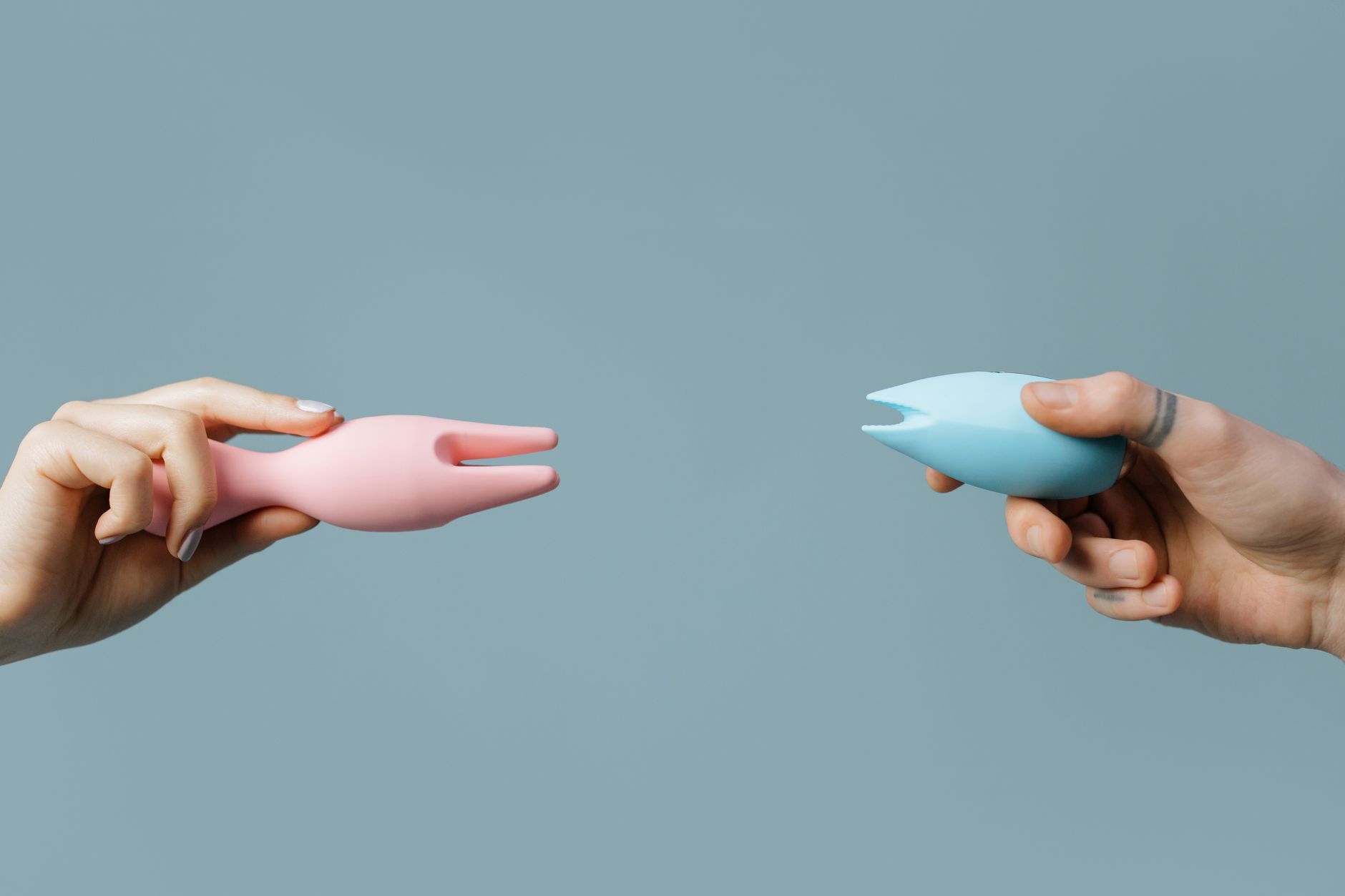
Here's what nobody tells you about new relationships and orgasms
When you're with someone new, your body doesn't always cooperate. The pressure to "perform," the unfamiliarity of a different touch, the anxiety about whether you're moving fast enough or slow enough. That's not broken. That's just what new intimacy feels like for most people.
The thing about lemon vibrators is they remove the performance piece entirely. You're not relying on your partner's rhythm or endurance. You're not managing their ego or their stamina. You're just touching yourself exactly the way you like it, and they get to watch you actually come. No faking, no hesitation, no worrying if you're taking too long.
That changes everything.
Why lemon vibrators work better for new partner scenarios
There's a neurological reason this matters. When you're with someone new, your nervous system is partially in fight-or-flight mode. You're assessing threat, reading micro-expressions, managing vulnerability. That activation uses up the exact neural bandwidth you need for pleasure.
Lemon vibrators work because they:
Bypass the performance anxiety. You're not dependent on timing or technique. You're in control. That alone shifts your nervous system into safety mode.
Give your partner a clear road map. Most new partners want to be helpful but don't know what actually works. When they watch you use a lemon clitoral vibrator, they see exactly what intensity, angle, and rhythm bring you to orgasm. No guessing. No "Is this good?" They know.
Build legitimate confidence. If you've been struggling to orgasm with new partners, actually having stronger, more reliable orgasms changes your entire experience of sexuality with them. Your body remembers that pleasure is possible. Your brain stops bracing for disappointment.
Create honest communication. Most couples never talk about what makes them come. You're supposed to just magically know. Using a lemon vibrator together forces that conversation into the room. And honestly, that honesty extends to everything else.
The framework I recommend for the first time
Timing matters here. Don't use a lemon vibrator the first time you're intimate. That's too much vulnerability at once. But by the second or third encounter, when you've established basic comfort and he or she isn't completely new anymore, introducing it is natural and grounded.
Here's how to position it: "I orgasm more reliably when I can control the sensation myself. I'd like to use this so I can actually come. Would you want to watch?" That's it. No apology, no explanation, no framing it as a reflection on them.
If they say yes, here's the sequence:
Start solo, with them present. Use your lemon vibrator the way you normally would. Let them see what you look like when you're actually aroused and focused on your own pleasure. Most new partners find this incredibly hot. It's not performance. It's honesty.
Then transition to mutual touch. Once you're warmed up and close to coming, they can touch you elsewhere. Skin. Hair. Neck. Whatever feels good. This keeps them engaged and removes that awkward "what do I do with my hands" feeling. They're participating without needing to cause your orgasm.
Let the orgasm be yours. When you come, don't dim it down to make them feel involved. Come fully. Make noise. Let your face change. This is the communication your partner needs to understand what pleasure actually looks like on you.
Afterward, the conversation is simple: "That's what it takes for me." Most partners feel relieved. They're not failing. They just needed to understand your neurology.
Building on that first time
Once your new partner has seen you use a lemon vibrator successfully, the next layer is much easier. You can incorporate it into partnered sex without it feeling clinical. You're using it while they're inside you. You're using it while they're touching you. You're using it while you're on top.
The key is that they now understand: this isn't replacing them. This is you knowing your body well enough to make pleasure actually happen. That's attractive.
What often happens next is that partners become genuinely curious about the device itself. They want to try different patterns with you. They want to see what happens if they use it while doing something else. That's when you get real collaboration instead of confusion.
What if they're uncomfortable with it
Some new partners will hesitate. "Will you still be able to come with just me later?" or "Does this mean I'm not enough?" These are real worries. Handle them directly.
"This isn't about you being enough. This is about me knowing my own body well enough to communicate it. If anything, that makes sex better for both of us because I'm not frustrated or faking."
If they stay uncomfortable, you have information: this person isn't ready for honest sexuality. That's not a personal rejection. That's a compatibility signal. How to Use Lemon Vibrators When Your Partner Is Hesitant About Toys dives deeper into that conversation if you need it.
The intensity question
With a new partner, you might want to adjust how you use your lemon vibrator. If you normally use intensity level 5 or 6 solo, try starting at level 3 or 4 when someone's watching. The goal is a strong orgasm, not a performance orgasm.
Intensity for its own sake doesn't make better orgasms. Intensity matched to your actual arousal level and comfort does. In a new relationship, your arousal might come online differently than when you're alone. Honor that. Start lower. Build gradually.
Communication during and after
While you're using your lemon vibrator with your partner present, narrate what's happening in your body. Not like a voiceover. Just natural: "That's building," or "I like it when you touch my chest," or "I'm close." This isn't being demanding. It's being clear.
After you come, have a real conversation. "What was that like for you?" Listen to the answer. Don't defend or explain unless they ask. Most partners will say something like "That was really hot" or "I liked being able to make you feel good." That's the foundation.
Some will ask: "Can we do this every time?" The answer is no, and you should say that. "I like this sometimes. I also like it when we explore together without it. Let's mix it up." This keeps sex dynamic and removes the pressure of needing a device to make you come. It becomes an option, not a requirement.
When you're both ready to go deeper
Once your new partner understands how you orgasm reliably, you can both experiment with what happens when you combine approaches. How to Use Lemon Vibrators When You Want Deeper Connection With Your Partner explores partnered techniques in more detail.
The real magic happens when both people stop treating sex like a performance and start treating it like information gathering. You're learning each other. You're building a nervous system together. Lemon clitoral vibrators just make that process more honest.
FAQ
Can I use lemon vibrators every time I have sex with my new partner?
Yes, but I wouldn't recommend it. Variety matters. Some sessions use vibrators, some don't. Some mix both. If you use a lemon vibrator every single time, a few things happen: you might start relying on it for arousal cues, your partner might feel left out of the pleasure-making process, and sex starts to feel routine instead of exploratory. Aim for 30 to 50 percent of the time when you're building a new partnership.
Will my new partner think I'm too demanding if I want to use a vibrator?
Not if you frame it as information, not criticism. "I'm better at orgasming when I can control sensation" is information. "You're not making me come" is criticism. The first opens a conversation. The second closes it. Most new partners are actually relieved. They're not failing. They were just missing the map.
What if I've never used a lemon vibrator solo and I want to start with my new partner?
Don't. Understand your own body first. Use it alone several times until you know exactly what sensation, intensity, and pattern reliably brings you to orgasm. Then introduce it to your partner with confidence. Your partner shouldn't be the place you're learning your own pleasure for the first time. That's too much vulnerability sandwiched together.
Should I tell my new partner about the vibrator before we're intimate?
Not necessarily in advance. But not as a surprise mid-sex either. Best approach: when intimacy is clearly happening, you pause and say, "I want to try something. Is that okay?" Then show them. This respects their consent and keeps the moment flowing instead of killing it with a logistics conversation earlier.
Does using a lemon vibrator mean I can't orgasm without one?
No. This is a common worry and it's not supported by the science. Regular vibrator use doesn't reduce your ability to come other ways. It actually does the opposite. When you understand what your body needs for orgasm, you can communicate that to partners, use that information in solo sessions, and become generally more confident in pleasure. You're not losing capacity. You're gaining literacy.
What if my new partner wants to use the vibrator on me?
Let them. Once you've taught them the basics by using it yourself, handing it over to them is the next layer of trust and exploration. They now understand the device. They know what intensity and pattern actually work. Handing them the control is a compliment and an invitation into your pleasure.
The real payoff
Using a lemon vibrator with a new partner isn't about the device. It's about refusing to fake or diminish your pleasure for comfort. It's about saying out loud: I deserve to come. I know what I need. And I trust you enough to show you.
That honesty makes everything else better. The conversation. The vulnerability. The sex. The relationship.
If you're navigating these conversations and want more specific language or you're stuck on a particular dynamic with your new partner, reach out. That's what I'm here for.