When your libido vanishes after everything changes
Let's be real. You move to a new city, or lose a job, or your parents get sick, or your kids leave home, and suddenly you don't want sex. Not "I'm tired tonight" don't want it. I mean the thought of pleasure feels like a task someone else assigned to you.
This isn't dysfunction. This is what your nervous system does when the ground shifts. Desire is a luxury good, neurologically speaking. When your brain is running threat-assessment mode, it doesn't allocate resources to arousal. It allocates them to survival.
The tricky part is knowing this intellectually while still feeling broken. And then watching a partner get hurt because they think it's about them. It's not. It's about your capacity shrinking when life gets loud.
Why major transitions kill desire (and why it feels like it won't come back)
When something big changes, your body enters a state of hypervigilance. You're processing new information constantly. New job means new social hierarchy to decode. New house means new routes, new sounds, new layout. Moved to be closer to aging parents. A child moved out, and now the house is different. These aren't small things. These are foundation shifts.
Your brain is running a constant background process of "what's different, what's wrong, what do I need to adapt to." That process eats bandwidth. Dopamine, which fuels desire, gets redirected to focus and problem-solving. Your cortisol is elevated. Your nervous system is in low-grade alert mode, even when you're trying to relax.
On top of that, life changes often come with secondary losses. You've lost routine. You've lost a familiar sexual setting (the old bedroom, the old time of day). You might have lost privacy, or gained it awkwardly. You've lost the version of yourself you were before, and that's a mini-grief even when the change is theoretically good.
The difference between depression and adjustment
Here's what I ask clients: has your libido completely flattened, or has it shifted? Flattened means even thinking about pleasure feels empty. Shifted means desire exists, but only in specific conditions, or at specific times, or with specific touch.
If it's flattened, and it's been more than three months, see a GP or therapist. That's adjustment crossing into depression territory, and you need professional support. That's not a relationship problem to fix with better toys. That's a nervous system problem to address with evidence-based care.
If it's shifted, lemon vibrators and air-suction technology become genuinely useful. Here's why.
How air-suction clitoral vibrators bypass anxiety during transitions
When your nervous system is running high threat-detection, traditional vibration can feel overstimulating. It's too direct, too loud, too much sensation when you're already processing a lot. You need something gentler that doesn't require mental effort to build arousal.
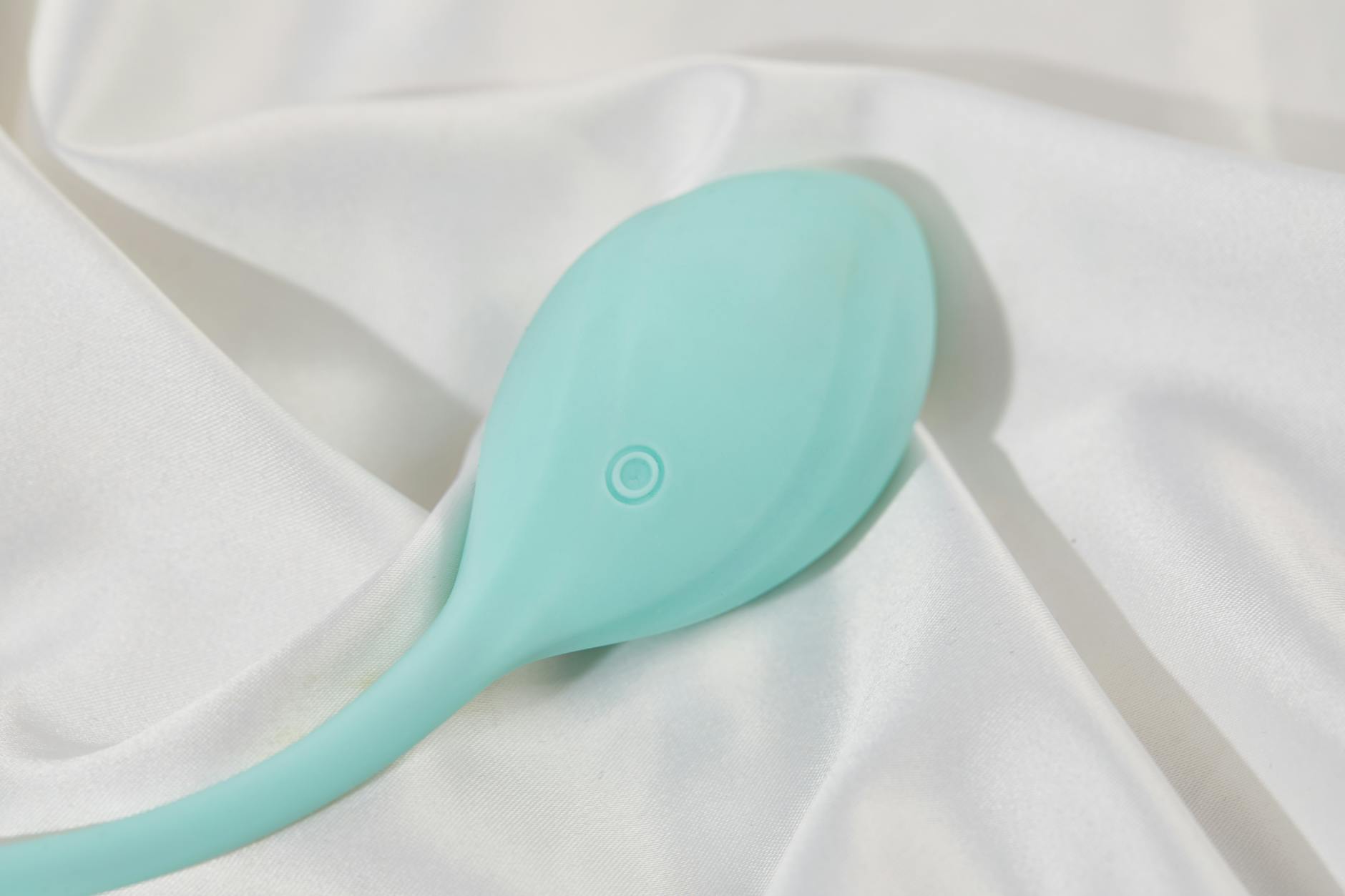
Air-suction vibrators like the Lem work differently. Instead of direct vibration, they create a gentle pulse around the clitoris. The sensation is less aggressive, which means your anxious brain can actually relax into it. You don't have to "perform arousal." The device does the work. Your job is to sit there and feel what happens.
That's crucial when desire is fragile. You need a tool that doesn't ask for anything. Tools that require you to build arousal, or find the right rhythm, or "do it right" will make an already-anxious person more anxious. Lemon clitoral vibrators remove that pressure. They work their magic with minimal effort from you.
Starting again when pleasure feels distant
Three things matter before you even use a lemon vibrator.
First, grieve the before. Seriously. The version of your life where sex was easy, where desire just showed up, where you knew the rhythm. That's gone. You can't get it back by forcing arousal. You get it back by acknowledging the loss first. Give yourself 10 minutes to sit with that. Sounds weird, but your nervous system won't actually move forward until it's allowed to acknowledge what changed.
Second, remove the goal. If you approach a lemon vibrator thinking "I need to orgasm to prove I'm still normal," you've already sabotaged yourself. The goal is sensation, not outcome. The goal is 15 minutes of not thinking about what changed. That's actually a massive goal when your nervous system is fried.
Third, choose the right time. Not when you're exhausted. Not when your partner is in the next room and you're worried about noise. Not when you have 10 minutes before you have to be somewhere. Choose a time when you have 30 minutes, privacy, and you're not operating on fumes.
The practical setup when life has knocked you sideways
Find a comfortable position. Lying down is usually better than sitting when anxiety is high because it signals to your body that you're safe. Your nervous system needs permission to relax.
Use water-based lubricant. Even if you normally don't need it, use it now. Less friction means less sensory overwhelm. Lemon vibrators pair beautifully with lube because the air-suction design doesn't damage it.
Start at pattern 1 or 2. Don't go looking for intensity. Intensity is the opposite of what you need. You need something so gentle that it feels almost incidental.
Set a timer for 15 minutes. That's enough time for your nervous system to begin downregulating without it feeling like an obligation. If something happens during those 15 minutes, great. If nothing happens, that's also fine. The point is proving to your body that pleasure can exist without performance.
When to bring your partner back into the picture
If you're in a relationship, your partner has probably noticed the shift. Here's what doesn't help: them trying to "fix it" with more touch, more initiation, more romance. That just adds pressure. Your nervous system reads that as a demand, not an invitation.
What does help is honesty. Tell them: "My nervous system is running high right now because of the move/the job/the change. It's not about us. I'm using tools that help me regain my own baseline first, and then we can reconnect." That honesty actually draws couples closer because it removes the shame.
Once you've had a few solo sessions with a lemon vibrator and you've actually felt pleasure return, then you can invite your partner in. But the invitation starts with you knowing you're capable of it again. That matters more than anything they can do.
Why reconnecting to your own pleasure matters more than "fixing" the relationship right now
When life changes, couples often panic about the sex dying. So they try to force it. They try date nights and lingerie and toys, and all that does is add anxiety to the existing pile.
The actual pathway back is slower and weirder. It's you, alone, remembering that your body can feel good. It's you discovering that air-suction clitoral stimulation feels different than what you were doing before, and that's fine. It's you setting boundaries about when and how this happens, which sounds boring but is actually radically empowering.
Once you've reclaimed your own capacity for pleasure, the relationship stuff resolves a lot faster. Not because the sex is better, but because you're not running a deficit of self-care and you're not resenting your partner for the shift.
If desire stays completely gone after you've done your own work and your partner has been patient, then you might actually need support using lemon vibrators with your partner. That's different work, and it's worth doing with professional support.
When this is about way more than libido
Sometimes libido loss isn't just stress. Sometimes it's a sign that the relationship itself is changing in ways you haven't named yet. Moving away from your old community. Having kids leave home and discovering you don't actually like being alone with your partner. Job loss shifting power dynamics. These are real things that deserve real attention.
If using a lemon vibrator does help you reconnect to pleasure solo, but you have zero interest in sex with your partner, that's not a libido problem. That's a relationship problem. A tool isn't going to fix that. A therapist might. An honest conversation definitely should come first.
The actual timeline for reconnection
Expect four to six weeks before pleasure feels natural again. Not forced. Not like you're checking a box. Actually natural. That's the time it takes for your nervous system to downregulate from transition mode and start allocating resources back to arousal. Some people are faster. Some take longer. There's no normal.
For the first two weeks, the point is just sensation. Weeks three and four, you might actually feel desire building. Weeks five and six, it starts to feel integrated back into your life. By week eight, you're probably having the thought "oh, I actually want to have sex" without it feeling theoretical.
During all of this, stay patient with yourself. Life changes are real. The disruption they cause to desire is real. Using a lemon vibrator isn't a shortcut around that. It's a bridge. It's a way of saying to your nervous system, "I'm still here. Pleasure is still possible. We don't have to abandon this part of ourselves just because everything else shifted."
People also ask
How long does it typically take to want sex again after a major life change?
Most people experience a return to baseline desire within four to eight weeks, assuming the initial stressor isn't ongoing. If you're still in acute crisis mode (a new job where you're working 70 hours a week, or a family health emergency that's still happening), it'll take longer. Your nervous system can't downregulate while the threat is still present. Once the intensity decreases, desire usually follows. If it's been three months and you still feel completely blank, check in with a therapist or GP.
Can using a lemon vibrator solo actually improve desire with a partner?
Yes, for a specific reason. When you reconnect to pleasure on your own terms, without performance pressure, you're literally teaching your nervous system that arousal is safe. That safety transfers into partnered situations. You know, from your own body, that pleasure is still accessible. That confidence makes a huge difference. Plus, you're less resentful because you're not waiting for your partner to "fix" your libido.
Is it normal for desire to shift, not disappear, after a move or job change?
Completely normal. You might only want pleasure at specific times, or only in specific positions, or only with specific types of touch. That's not broken. That's your nervous system being selective about when it feels safe to relax. Work with that, not against it. If you only want sex on Sunday mornings in the comfort of your old routine, that's the reality for now. Build from there.
Should I tell my partner I'm using a vibrator during this transition?
If you're in a committed relationship and you've gone silent on sex, yes. Not as a confession. As information. "My nervous system needs some time to recalibrate. I'm going to explore solo pleasure for a few weeks so I can understand what I actually want right now." That prevents your partner from internalizing the silence as rejection. It also prevents them from trying to "fix it" in ways that create more pressure.
What if using a vibrator solo makes me feel more disconnected from my partner?
That's usually a sign that you need to have a bigger conversation about what's changed between you, not just your libido. Life transitions often expose relationship issues that were already there. A vibrator isn't going to mask that. If that feeling persists, consider working with a couples therapist who understands that desire isn't separate from relationship dynamics.
Can I use a lemon vibrator if I'm also taking antidepressants during this transition?
Yes. Antidepressants can impact desire, but they're not preventing pleasure entirely. A lemon clitoral vibrator often works well alongside medication because the air-suction design is gentler and doesn't require as much natural arousal to feel good. If you have questions about how your specific medication interacts with sexual pleasure, this post covers that in detail.
The path back starts with permission
Here's what I tell clients: your body didn't break because your life changed. It adapted. That's smart. That's healthy. Reconnecting to pleasure isn't about forcing yourself back to "normal." It's about finding the version of normal that fits your life now. A lemon vibrator, with its gentle, low-pressure design, is often the easiest way to start.
Give yourself the same grace you'd give a friend. Acknowledge what shifted. Take the time you actually need. Use tools that remove pressure instead of adding it. Then watch what happens when you're not fighting your own nervous system.