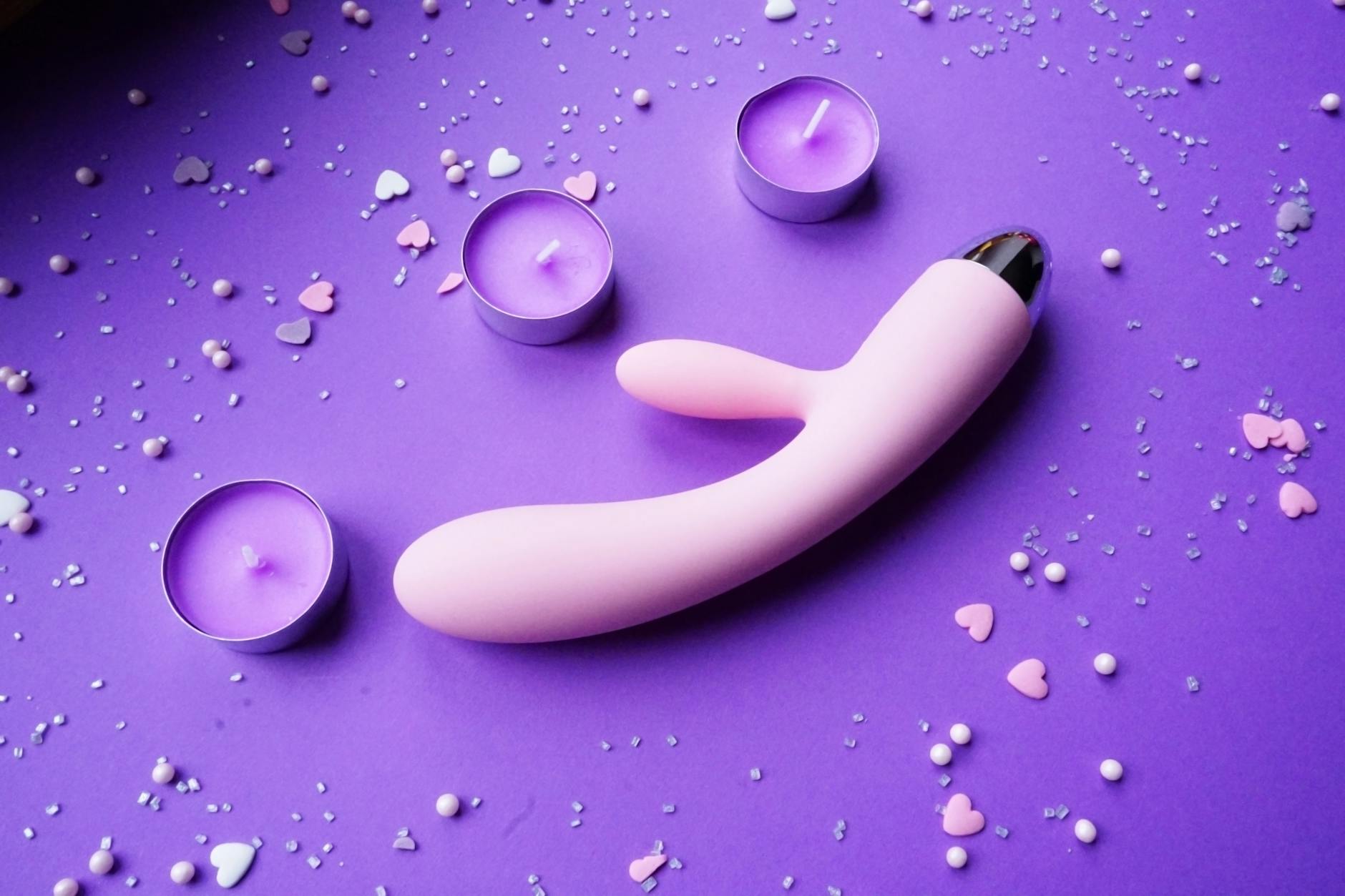
Grief kills desire. That's not a problem to fix right now.
Let's be real. When someone you love dies, your nervous system goes into lockdown mode. Your body isn't thinking about orgasms. It's thinking about survival. Pleasure feels like a betrayal, or worse, impossible. You might feel physically numb, or you might feel guilty the moment anything pleasure-adjacent crosses your mind.
That's completely normal. And it's also not where you have to stay.
Grief isn't linear, and neither is the journey back to pleasure. Some people find that sexual touch feels healing months into loss. Others aren't ready for years. Both are fine. But if you're reading this, you're probably sensing a small stirring of want, and you're not sure how to trust it. That's what we're talking about today.
The neurobiology of grief and desire
When you're grieving, cortisol and adrenaline are elevated. Your vagus nerve (the one responsible for rest-and-digest functions, including arousal) is basically offline. Your prefrontal cortex, which handles decision-making and pleasure-seeking, takes a backseat to your amygdala, which is screaming about threat and loss.
This isn't weakness. This is your nervous system doing exactly what it's supposed to do.
But here's the thing: pleasure doesn't have to wait for grief to finish. Grief is slow. Pleasure can coexist with it, at low volume. And when you start moving your body intentionally (which is what happens when you use a lemon clitoral vibrator), you're literally signaling to your nervous system that it's safe to feel good again.
Lemon vibrators are particularly useful here because they use gentle suction instead of buzzing vibration. That difference matters when your body is still in protective mode. Suction is rhythmic. Rhythmic sensation calms the nervous system in a way that traditional vibration sometimes can't. It's the difference between a jolt and a hug.
Grief and guilt, the two-headed monster
Here's what I hear from clients: "If I orgasm, I'm saying I'm okay with them being gone." Or, "Pleasure feels like I'm leaving them behind." Or, the quieter one: "I don't deserve to feel good right now."
These aren't thoughts you need to logic away. They're grief talking. And the best response isn't argument. It's gentleness.
Using a lemon clitoral vibrator (like the Lem) when you're grieving doesn't mean you're healed. It doesn't mean you've moved on. It means you're touching yourself with kindness. It means your nervous system gets to feel something other than pain for five minutes. That's allowed. Actually, it's necessary.
If guilt comes up while you're using any clitoral vibrator, that's data. It doesn't mean stop. It means pause, breathe, and ask yourself: Am I being cruel to myself right now? If the answer is yes, that's worth sitting with. But if you're just feeling the strange grief-pleasure mix, that's the beginning of integration.
How to actually start
Three concrete practices that help my clients reconnect:
1. Daytime touch, no goal. Before you even think about a lemon vibrator, spend three days just touching your own arm, chest, or thigh while you're doing something else. Reading, listening to music, having tea. Touch that isn't trying to lead anywhere. This teaches your nervous system that touch can be neutral, even comforting, without it meaning anything.
2. Low stimulation, high patience. When you do use the Lem or any lemon clitoral vibrator, start with the lowest suction setting. You're not looking for an orgasm. You're looking for sensation. Turn it on, notice what you feel, and don't push toward anything. If you orgasm, great. If you just feel a gentle buzz and then stop, that's equally valid.
3. Combine it with something grounding. Use your vibrator while taking a warm bath, with a candle burning, or with one hand on your heart. You want your nervous system to register safety. A lemon vibrator in a context of self-kindness and grounding is very different from the same vibrator in a context of "I should be horny by now."
The role of your partner (if you have one)
If you're grieving the loss of someone outside your current relationship, your partner might be confused about what's happening. You might have loved each other wildly before the loss, and now you're not touching at all. That's common. Don't assume it's permanent.
One helpful move: tell your partner you're starting to touch yourself again, gently, and that you're not ready to involve them yet. No need to make a whole conversation. Just a simple, "I'm starting to reconnect with my body. I'm not ready for us yet, but I wanted you to know."
If you want to use the Lem or another lemon clitoral vibrator eventually with a partner, that conversation can happen later, when you've already rebuilt your own relationship with pleasure. How to use lemon vibrators with a partner without awkwardness has more on that when you're ready.
When pleasure becomes part of healing
Grief doesn't have a timeline. But there's often a moment, sometimes weeks or months in, where your nervous system starts to recognize that pleasure isn't a betrayal. That moment is fragile and worth protecting.
If you're feeling this shift, a lemon vibrator can be a private, judgment-free way to tell your body, "You're safe. You can feel good again." The beauty of suction-based clitoral vibrators is they're gentler than traditional vibrators, which means less overstimulation of an already-sensitive nervous system.
You don't have to perform pleasure. You don't have to reach an orgasm. You just have to show up to yourself with a little bit of kindness. A lemon sexual toy is just a tool. The real work is the permission you're giving yourself.
If desire doesn't return, that's also completely fine. Some people find that grief shifts their sexuality permanently. That's not wrong. But if you feel a quiet pull back toward your own pleasure, trust that. Your body knows what it needs.
FAQ
Can I use a lemon vibrator too soon after loss?
There's no timeline. If your nervous system is completely locked down, the answer is probably no right now, and that's okay. But if you're sleeping again, eating again, and noticing small moments of lightness, you might be ready to explore. Start with nonsexual touch first. Use a vibrator only when your body seems interested.
What if I feel nothing when I use it?
Numbing is part of grief. If you feel literally nothing, that's not a sign you're broken. It's a sign your nervous system is still protecting itself. Keep the vibrator in a drawer and check in with yourself in a few weeks. Sometimes the ability to feel returns gradually, not all at once.
Is it selfish to want pleasure when someone I love has died?
No. Pleasure is a form of self-preservation. Your nervous system needs to know that life still has moments of goodness in it. Using a lemon clitoral vibrator on yourself is an act of self-respect, not selfishness.
Can I use a lemon vibrator if I'm on antidepressants after grief?
Yes. Antidepressants can dull sensation and desire, which grief also does. How to use lemon vibrators with antidepressants walks through this in detail, because the combination is actually pretty common.
What makes lemon vibrators different for grief recovery?
Suction is rhythmic and calming in a way buzzing vibration often isn't. It also doesn't require the same degree of engagement. You can turn it on and let it do the work, which is useful when your body is depleted. And honestly, the gentle pressure of suction can feel more like a hug than traditional vibration feels.
Should I tell my therapist I'm using a vibrator?
If you have a grief counselor or therapist, yes. They're not there to judge. They're there to support your nervous system's return to baseline. Reconnecting to your body through touch is legitimate healing work, and they'll likely affirm it.
The long view
Grief rewires you. It's not something you get over. But bit by bit, joy and pleasure start to coexist with loss, instead of being erased by it. Using a lemon sexual toy as part of that process is entirely reasonable. You're not forgetting the person you lost by touching your own body. You're remembering that you deserve to feel good, too.
Start small. Be patient. And don't rush the timeline. Your nervous system will let you know when pleasure is ready to come back.