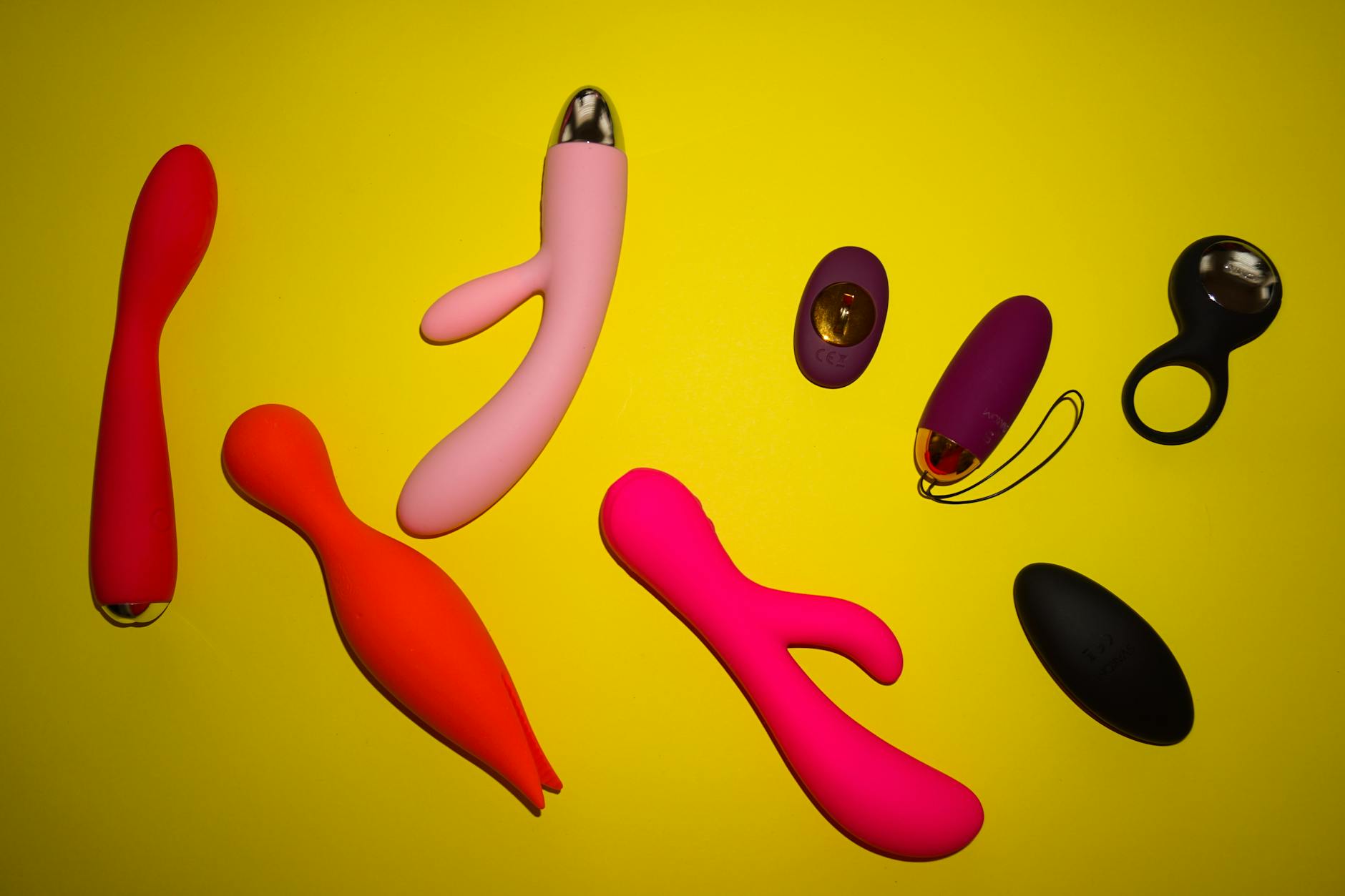
Let's talk about what 'sensitive' actually means
Sensitivity is not a flaw. It's not a problem to fix. But it does change what kind of stimulation feels good, and most vibrators on the market are built for people who tolerate (or want) direct, sustained vibration. If that's not you, the experience ranges from disappointing to painful. Which is unfair, because you deserve tools designed for your body.
Here's the thing: sensitivity usually means one of three things. First, the nerve endings in your clitoris are densely packed and reactive. Second, the skin there is thinner or more delicate than average. Third, there's nerve-related oversensitivity from past pain, hormonal changes, or just how your body's wired. All three mean that a standard vibrator pressing directly against your clitoris can feel like too much, too fast.
How traditional vibrators miss the mark
Most clitoral vibrators work one way: they buzz. The motor creates rapid back-and-forth or circular motion directly against tissue. For plenty of people, this is exactly right. For sensitive users, it's either numb or raw. You're either holding it at an awkward angle to reduce pressure, turning it to the lowest setting (which then feels anemic), or giving up altogether.
The problem is mechanical. Traditional vibration requires direct contact. More pressure equals stronger sensation. Less pressure equals weaker sensation. There's no middle ground where you get intensity without impact.
Enter air-pulse technology: a completely different mechanism
Lemon vibrators and other air-suction devices work on an entirely different principle. Instead of vibrating, they pulse gently. Think of it as a soft suction that rhythmically tightens and releases around the clitoris. The sensation is indirect. The pressure is diffuse. The stimulation is targetable in a way that traditional vibration never is.
Here's what happens physiologically. Air-pulse stimulation activates the nerve clusters around the clitoris without requiring sustained pressure on the most sensitive spot itself. You get clitoral engagement through compression and release, not friction. This distinction matters enormously for sensitive bodies.
Research on clitoral suction devices shows they produce higher arousal rates and more reliable orgasms in people who find traditional vibration uncomfortable. One published study reported that suction devices were preferred by 85 percent of users with vulvar pain conditions or clitoral oversensitivity. That's not accidental. The mechanism is genuinely different.
Why lemon suction works for sensitive tissue
A lemon sexual toy uses what's called pneumatic stimulation. Tiny air pulses create a gentle drawing sensation. The genius part is that you control intensity not by pressing harder, but by adjusting pulse patterns and strength settings. You can have intense sensation without impact.
The clitoris has three main zones: the external glans (the part you see), the visible shaft, and the internal body that extends upward into the pelvic floor. Traditional vibrators mostly stimulate the glans with high-frequency buzzing. Air-pulse devices engage all three zones through gentle suction, spreading the stimulation more evenly. This dilutes intensity across a wider area while maintaining sensation depth.
For people with thin or reactive skin, this distributed approach prevents the rawness that comes from concentrated pressure. For people with nerve oversensitivity, it sidesteps the pain reflex that direct vibration can trigger. For people who are just wired differently, it delivers a sensation pattern their nervous system actually enjoys.
The role of warm-up and patience
Sensitivity is often worse when you're not aroused. The clitoris engorges during arousal, the surrounding tissue becomes more elastic, and the nerve endings shift slightly from their resting position. A lemon vibrator or air-suction device works best when you've already spent 10 to 15 minutes on non-device foreplay. This matters more for sensitive bodies than for anyone else.
Start with the lowest pulse setting. Move the device slightly so it's not directly on your glans but rather on the hood or shaft. Many people with sensitivity find that indirect contact feels better than direct. The suction still works. The sensation is still intense. It's just not overwhelming.
Temperature matters too. Warm skin is more responsive. A warm shower before solo time or partnered play can genuinely shift how your body responds. This isn't placebo. The tissues are literally more pliable when they're warm.
When sensitivity shifts with hormones or aging
Sensitivity often changes during the menstrual cycle. Around ovulation, estrogen is high and tissues are more engorged, so sensitivity tends to feel more like intensity rather than discomfort. Right before menstruation, estrogen and progesterone both drop, which can make the clitoris feel almost raw. After menopause, sustained lower estrogen means the skin thins further, and sensitivity often increases. This is not a decline in pleasure. It's a change in what kind of stimulation serves you.
If your sensitivity is new or worsening, it's worth checking in with a healthcare provider. Vulvodynia, lichen sclerosus, or other dermatological conditions can mimic hormonal sensitivity but need different approaches. A good gynecologist or vulvovaginal specialist can tell the difference in minutes. If it's hormonal, a lemon clitoral vibrator or other air-pulse device often helps. If it's structural or inflammatory, you'll need targeted treatment first.
How to talk about sensitivity with a partner
If you're partnered, sensitivity often becomes a joint conversation. A partner might interpret clitoral sensitivity as a sign you're not aroused enough, or that something is wrong with the relationship. Neither is true. It's just how your nervous system is built.
The cleanest way to frame it is external to the partnership. "My body works best with indirect stimulation and gentle pressure. Here's what that looks like." Hands, tongues, and toys can all deliver this. A lemon vibrator makes it simple because the sensation is inherently gentler, even at higher settings. You're not asking your partner to do something delicate by hand for 20 minutes. You're using a tool designed for your body.
Building confidence around sensitivity
There's a narrative that sensitivity means fragility. It doesn't. Sensitive clitorises can experience intense, full-body orgasms. You're not broken. You're not high-maintenance. You're just someone who benefits from a different tool.
If you've never tried an air-pulse device, a lemon vibrator is a logical place to start. The design is intuitive. The sensation is genuinely different from what you've experienced before. And because the mechanism is indirect, it often clicks for people who thought their sensitivity meant they couldn't use toys at all. You absolutely can. You just needed the right one.
FAQ: Lemon Vibrators and Sensitive Clitorises
How is a lemon vibrator different from a regular vibrator for sensitive skin?
A lemon sexual toy uses air-pulse technology, which creates a gentle suction rather than sustained vibration. This distributes stimulation across a broader area instead of concentrating pressure on one spot. For sensitive tissue, this approach reduces rawness and pain while maintaining intensity. A standard vibrator applies direct pressure through vibration, which can feel overwhelming if your clitoris is easily overstimulated.
Can you use a lemon sucker if you have vulvodynia or clitoral pain?
Maybe, and it's worth discussing with a specialist first. Some people with vulvodynia find that air-pulse devices feel better than traditional vibrators because they don't require direct pressure. Others find any stimulation uncomfortable until the underlying condition is treated. A vulvovaginal pain specialist can help you understand your specific triggers and whether a lem vibrator might help or hinder. Don't self-treat vulvodynia without professional guidance.
How long does it take to adjust to air-pulse stimulation if you're used to traditional vibrators?
Most people notice a difference in sensation within the first use. Adjustment isn't usually the bottleneck. Finding the right pulse pattern for your body takes a few sessions. Start on the gentlest setting and work up. Pay attention to which patterns feel good and which feel either numb or too intense. Within three to five uses, most people identify their preference.
Is a lemon clitoral vibrator safe for everyday use?
Yes. Air-pulse devices don't carry the same nerve fatigue risk as high-frequency vibrators. You won't "numb out" your clitoris with regular use of a lem vibrator the way some people report with traditional vibrators. That said, listen to your body. If you're sore or fatigued, take a break. Pleasure isn't about pushing through discomfort.
What if a lemon vibrator still feels too intense?
If air-pulse stimulation still feels overwhelming, try an even gentler approach. Use a lower pattern number, reduce session length, or focus on indirect contact (stimulate the shaft or hood rather than the glans). If nothing works and sensitivity is causing real distress, talk to a healthcare provider about whether there's an underlying pain condition. Sometimes what feels like oversensitivity is actually a treatable medical issue.
Can you combine a lemon vibrator with other stimulation, like partnered touch?
Absolutely. Many people find that layering stimulation makes the experience feel richer. A partner can provide touch to other parts of the body while you use a lemon sucker, or you can alternate. Some couples use a remote-controlled toy so one partner controls the vibrator while engaging in other ways. There's no "right" way. Use it however brings you pleasure.
The bottom line
Sensitivity is not a limitation. It's a feature of your body, and you deserve tools designed with that in mind. A lemon vibrator or other air-pulse device works differently than traditional vibrators precisely because it doesn't rely on direct pressure. For sensitive clitorises, this is often the difference between "this hurts" and "oh wow, this actually works for me."
If standard vibrators have never felt right, try something built for sensitive bodies. Your pleasure is worth that exploration. Head to our buying guide to compare air-pulse options and find the device that matches your body's needs. And if you have questions about what might work for you, reach out. We're here to help you find what actually feels good.