
The maybe-yes is real, and it's not the same as no
Your partner hasn't shut you down. They've done something trickier: they've left the door slightly open. "I don't know," or "Maybe someday," or "I guess if you really want to." That's not enthusiasm, but it's not rejection either. And that's where most people get stuck.
The instinct is to push through the opening. The better move is to understand what's actually behind it.
What the hesitation usually means
When a partner expresses measured interest rather than clear excitement, they're almost never saying "I don't want this." They're usually saying one of three things.
"I'm worried I'll be replaced." Toys can feel like competition, especially if your partner hasn't been asked why they matter to the sexual relationship. Without that conversation, a vibrator looks like an upgrade, not a complement.
"I'm not sure if this is normal for us." If you haven't talked openly about sex before, introducing a physical object can feel like a boundary shift without permission. The hesitation is often about pace, not desire.
"I don't fully understand what this would feel like or mean." Uncertainty about sensation, logistics, or what your pleasure actually looks like can read as disinterest. It's often just unfamiliarity.
The work here isn't convincing your partner. It's making the invisible visible.
Start with conversation, not the toy
Don't lead with the device. Lead with curiosity about your partner.
Ask directly: "What's your hesitation?" Not in a confrontational way. A genuine one. "I'm noticing you seem unsure about toys, and I want to understand what's going on for you." Then actually listen. Don't defend. Don't explain why they're wrong. Just hear what matters to them.
Most people skip this step. They assume they know the objection, then argue against an imagined version of it. That's a shortcut to nowhere.
Once you understand the actual hesitation, you can speak to it. "I'm not looking for you to be replaced. I think this could be something we share." Or: "I know this feels new. We can take it as slowly as you need."
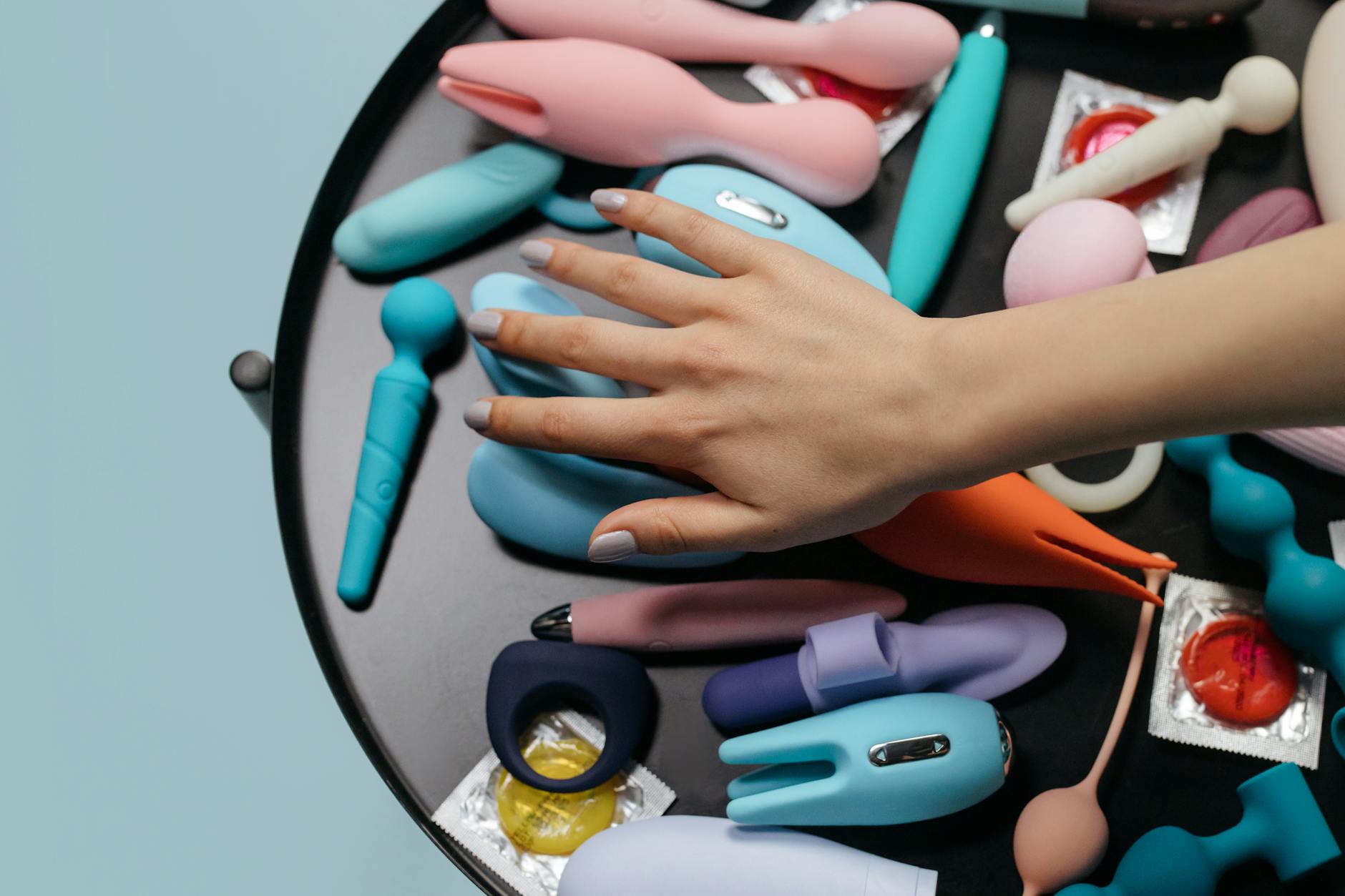
Photo by cottonbro studio on Pexels
Build interest gradually, not intensity
If your partner is curious but hesitant, curiosity is your leverage point. Don't use it to rush. Use it to deepen.
Talk about what you like about the idea. Not in a clinical way. Share what excites you about the possibility of pleasure, about connection, about trying something new together. Let your own enthusiasm be contagious without demanding reciprocation.
If your partner asks questions, answer them fully. "What does it actually feel like?" "It's a suction-based vibrator, so instead of vibrating, it creates a rhythmic pulse that feels nothing like a traditional vibrator." Don't oversell. Just be honest.
Show them pictures. Let them look at what lemon vibrators actually look like without pressure. Sometimes visual context dissolves half the hesitation.
Give it time. One conversation about toys isn't consent or interest. It's an opening. Multiple conversations, spread out, give your partner space to sit with the idea, develop opinions, ask new questions. Curiosity that builds over weeks is way more reliable than agreement given in the moment.
The demo that works
If your partner agrees to see or try something, make it low-stakes.
"Want to just see how it feels in your hand?" is a different ask than "Want to use this with me?" One is curiosity. The other is performance expectation.
Let them hold it. Feel the weight, the material. Understand that it's not intimidating in a physical sense. For many people, that removes about 40 percent of the anxiety.
If they're interested in sensation, suggest trying it on your body first, with them watching or touching you. This accomplishes several things at once: they see you enjoying it, they understand how it works without pressure to participate, and they get to observe your pleasure directly. That's often the moment curiosity tips into genuine interest.
Never frame this as a test you're hoping they'll pass. Frame it as you exploring your own body, and them getting to be part of that in whatever way feels comfortable.
The distinction between interest and readiness
This matters because a lot of people conflate them. Your partner might become genuinely interested in the toy, and still not be ready to use it together. Those are two separate things.
Interest means they understand it, they think it's kind of hot, they might want to try it on you or have you use it while they're present. Readiness means they feel secure enough and excited enough to have it involved in your mutual pleasure.
Some partners move between those states quickly. Others take months. Both are normal.
If your partner is interested but not ready, don't interpret that as failure. That's forward motion. Keep normalizing it. Use it when they're comfortable. Enjoy it. Let them see you enjoying it. Their readiness will either develop or it won't, but it won't develop if they feel pressured.
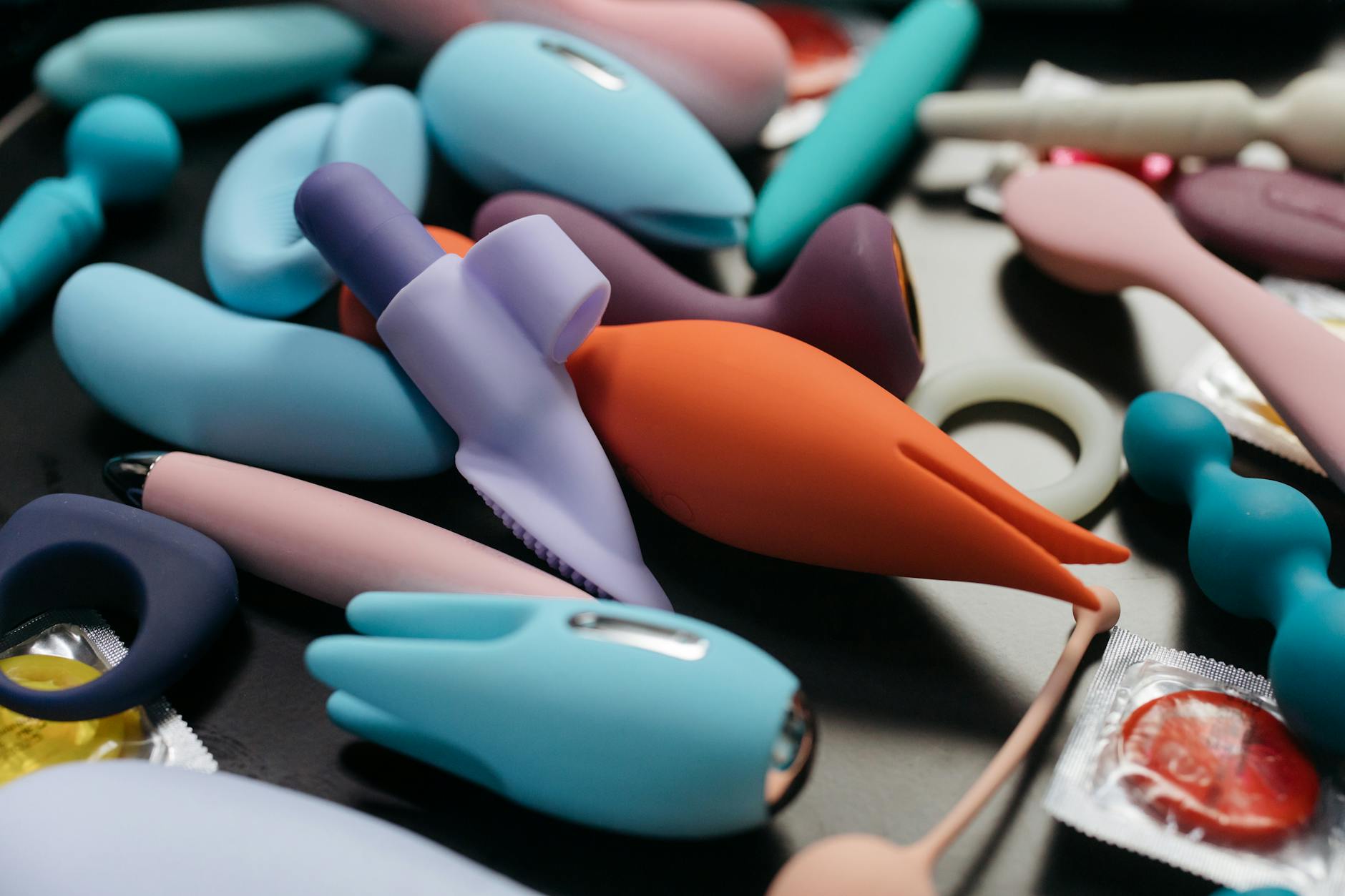
Photo by cottonbro studio on Pexels
What to do when you want it more than they do
Here's the honest part: sometimes you're more interested in toys than your partner is, and that's okay. It doesn't mean you have to choose between your pleasure and the relationship.
You can use lemon vibrators solo. You can use them when your partner isn't around. You can also use them while your partner is present but not directly involved. They can watch, or be in the room doing something else, or not know the details.
What matters is honesty. "I want to use this when we're together, and I'm not asking you to participate directly. I'm just asking if you're comfortable with me having this pleasure as part of our sexual time." For many partners, that framing makes all the difference. You're not asking them to do anything. You're just asking them to be okay with you taking care of yourself.
Some partners, once they see this in action, become genuinely curious. Others remain uninterested, and that's their boundary. Both are fine.
When the hesitation isn't about the toy
Sometimes the maybe-yes energy isn't about toys at all. It's about sex being hard to talk about in your relationship. It's about feeling disconnected. It's about previous shame around pleasure.
If that's the pattern, a toy won't fix it. A real conversation, possibly with a couples therapist, will. Toys can enhance an already-connected relationship. They can't create connection that isn't there.
If your partner is hesitant about lemon vibrators specifically, but they're engaged and excited about other aspects of your sexual life, that's genuinely fine. Not every person wants to use toys. Not every couple needs them. The goal isn't toy adoption. The goal is pleasure and connection, in whatever form works for you.
The patience play
Patience isn't the sexiest virtue, but with a partner who's curious but hesitant, it's your actual power move.
When you don't push, when you answer questions without agenda, when you let them set the pace, you create the conditions for genuine curiosity to develop. And genuine curiosity, over time, usually becomes genuine interest.
Some partners will never want to use toys with you. That's their choice, and it's valid. But many partners who start with "I don't know" end up somewhere between "okay, I guess" and "actually, that was kind of amazing." The difference is usually not the toy. It's how you got there.
People also ask
What if my partner says they're interested but never wants to actually use it?
That's a fair pattern to notice and name. "I want to check in. You seemed curious about toys, but we haven't tried anything. Is that still something you'd consider, or did you decide it's not for you?" Sometimes people are curious about the idea but not the reality. Sometimes they need more time. Sometimes they were being polite. A direct question, asked without blame, gets you an actual answer.
Can I use a lemon vibrator by myself even if my partner isn't interested?
Absolutely. Your pleasure is yours to pursue. The only question is logistics and boundaries. Are you using it when your partner is present? Would they prefer not to know? Have you talked about privacy and comfort? Solo pleasure and partnered pleasure are separate conversations. You can have both.
How do I know if my partner's hesitation is about the toy or about our relationship?
Listen for specificity. If they're objecting to toys in general, they might be hesitant about your relationship dynamics. If they're asking practical questions about sensation, safety, or how it works, they're probably just uncertain about the device itself. The questions tell you what's actually happening.
What if I try to introduce the topic and they get angry or shut down?
That's important information. Anger or shutdown around sex isn't about toys. It's about something deeper. trauma, shame, or relationship friction that needs to be addressed separately. That's a moment to pause the toy conversation and possibly seek couples counseling or individual therapy. You can't toy your way through that.
Is it okay to use a lemon vibrator alone while my partner is in the house but uninterested?
It depends on your agreement. Some couples are completely comfortable with solo pleasure happening alongside partnered sex. Others have different boundaries. You need to have actually discussed this, not assumed it. "I'd like to use toys for myself sometimes. How do you feel about that?" is the question to ask.
How long should I wait for my partner to become interested?
There's no timeline. Interest either develops or it doesn't, and it develops faster when you stop waiting for it and just live your own pleasure. Focus on your own curiosity. Let them observe your comfort with your body. Interest often follows, but if it doesn't, that's information too.
The real work is the conversation, not the device
A lemon clitoral vibrator is a tool. It can't communicate for you. It can't build trust if it's not there. It can't create interest where there's genuine discomfort.
What shifts things is the conversation. What shifts things is your willingness to hear what your partner actually cares about, not what you assume they care about. What shifts things is giving them time and space to develop their own curiosity instead of demanding it on your timeline.
Some partners will move all the way from hesitation to enthusiasm. Some will stay in "I'm okay with it because you're happy." Some will never be fully on board. Your job is to listen, be honest, move at their pace, and know which outcome you can live with.
Most couples who start with that maybe-yes energy end up somewhere interesting, because they did the work to understand each other first. The toy just becomes part of what's already possible between them.
If you're looking for clarity on your relationship or your own pleasure, I'm here to help. Get in touch.