
The conversation nobody wants to have
Let's be real. Your partner doesn't want toys in the bedroom. Maybe they think it means they're not enough. Maybe they see it as a threat, a replacement, or a commentary on their performance. Maybe they just find the whole thing uncomfortable. And now you're stuck between your own desire for better sensation and the fear of starting a fight that neither of you will recover from cleanly.
Here's the thing: this dynamic is more common than you think. And it's also completely solvable. But only if you understand what's actually bothering them, which is almost never what they say out loud.
What the resistance usually means
When a partner pushes back on lemon vibrators or any toy, they're often operating from one of three fears. Understanding which one you're dealing with changes everything about how you approach it.
Fear 1: Inadequacy. "If she needs a vibrator, I'm not doing my job." This is the most common one, and it's rooted in a pretty fundamental misunderstanding of how pleasure works. Their brain has tied your orgasm directly to their skill, effort, or attractiveness. A toy threatens that story.
Fear 2: Replacement. "This will become a substitute for me." The worry is that you'll prefer the vibrator, that partnered sex will become secondary, or that you'll eventually not need them at all. It's a scarcity mindset: there's only so much pleasure to go around.
Fear 3: Discomfort with sexuality. Some partners genuinely aren't comfortable with explicit sexuality, sex toys, or the conversation itself. It's not about inadequacy. It's about cultural conditioning, shame, or a fundamentally different relationship to sex than you have.
These are not the same problem, and treating them the same way will keep you stuck.
How to start the conversation (the right way)
The mistake most people make is leading with the toy. "I want to try a lemon vibrator." That lands as a demand, which triggers defensiveness.
Instead, start with curiosity. Ask them what they think sex should feel like. Ask them what they're worried about. Ask them if they feel pressured to be a certain way in bed. Make it about their experience, not about what you want.
Here's a practical opener: "I've been thinking about how we can both feel better during sex. Not because anything's wrong. But because I think there's more we could explore together. I'm curious what you think about that."
Notice what that does. It positions toys or sensation as a joint project, not a solo decision. It's collaborative, not demanding.
If they resist directly, stay curious. Don't defend. Don't argue. Defensiveness is a door slamming. Curiosity is a door opening.
Try: "What worries you about it?"
Don't try: "That doesn't make sense." "You're being insecure." "It's just a toy."
The inadequacy fear (the most treatable one)
If your partner thinks a vibrator means they're failing, you need to separate two things in their mind: stimulation and connection.
Stimulation is mechanical. A lemon clitoral vibrator creates a specific type of suction and pulse that fingertips or tongues can't replicate. That's not a judgment on the partner. That's just physics.
Connection is emotional and relational. It's presence, attention, responsiveness, eye contact. Those things can't be mechanized, and they matter infinitely more than whether an orgasm came from a toy or not.
Here's what helps: use lemon vibrators together in a way that emphasizes connection over replacement.
Example: You could use a suction toy while they're inside you, or you could use it during foreplay while they're kissing you, holding you, talking to you. The vibrator isn't replacing them. It's joining them. It's an addition, not a substitution.
Many of my clients find that framing it as "something we can do" rather than "something I do" completely changes how a resistant partner responds. It shifts from threat to collaboration.
When solo use is actually the answer
Here's what often gets missed in these conversations: you don't need your partner's permission to use a vibrator alone.
This isn't about defiance or deception. It's about reclaiming your own pleasure as a valid thing that doesn't require anyone else's sign-off.
Solo sex with a lemon clitoral vibrator serves a function that partnered sex can't. It's exploration without performance pressure. It's research. It's learning what you actually like, which makes partnered sex better anyway.
The conversation with your partner might actually be: "I'm going to be exploring solo pleasure, and I wanted to be honest about that with you. It's not about our sex life. It's about me getting to know my body better. And I think that's healthy."
Some partners relax when they realize it's not an attack on them. It's just you taking care of yourself. Others stay uncomfortable, but that's a different conversation.
When they're softening (capitalize on it)
If your partner starts to move from resistant to curious, don't celebrate too loudly. Just keep moving forward.
Start small. Don't lead with the fancier lemon vibrators. Show them something subtle. Educational, even. "I read that suction stimulation works really differently than traditional vibration. I'm just curious about it." Keep it scientific. Keep it collaborative. Keep it low-stakes.
If they eventually agree to see it, don't make it a big moment. Show it casually. Let them hold it. Explain what it does without overselling. The less tension in the room, the less defensive they'll feel.
Many partners who resist toys have never seen one up close. They're imagining something clinical or industrial. A lemon vibrator is elegant, simple, and nothing like they expected. Demystifying it matters.
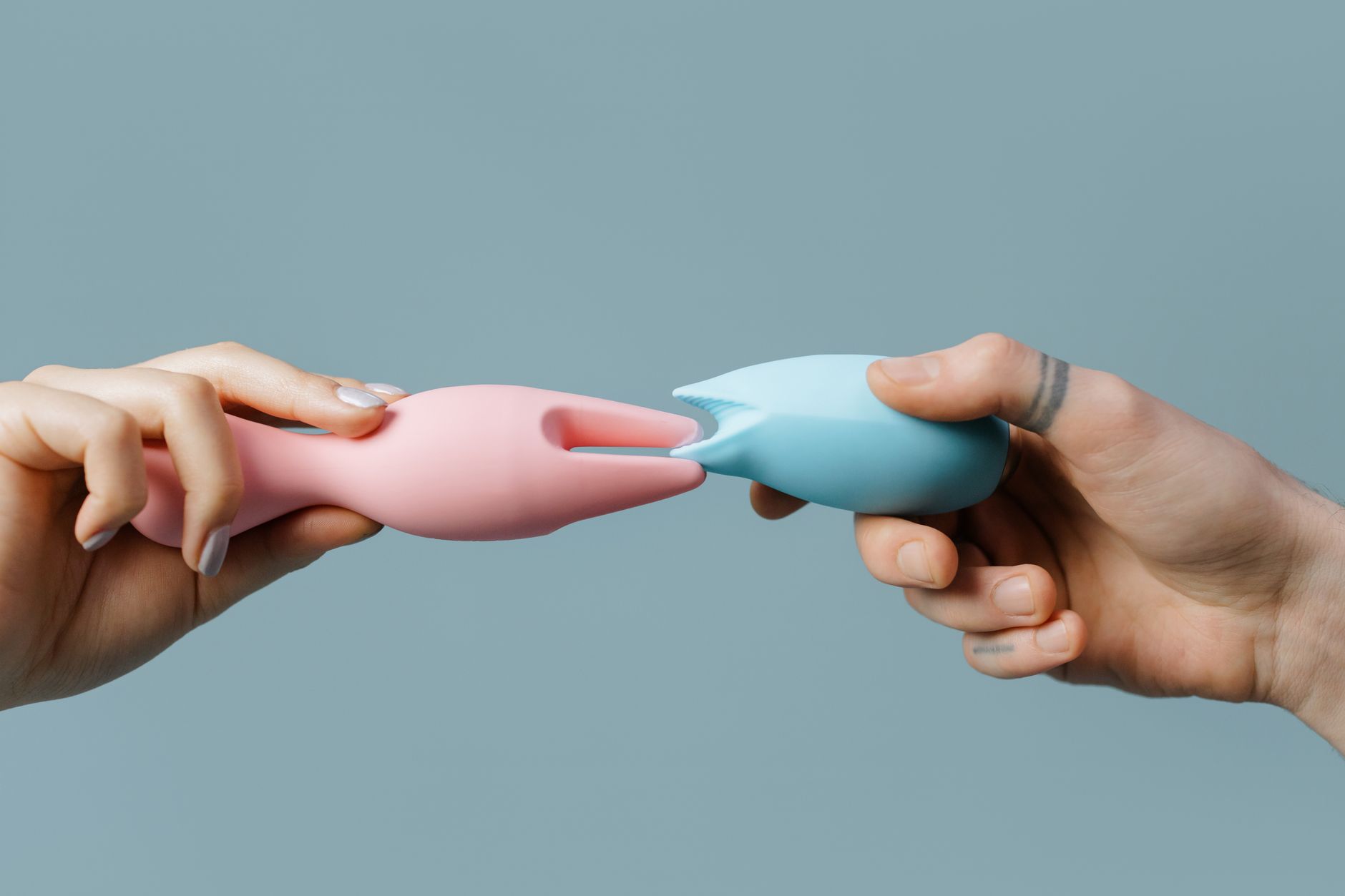
Photo by cottonbro studio on Pexels
If you get the green light to try it together, focus on your pleasure. Let your body respond. Don't perform. Don't narrate. Let the experience speak. Many partners who were skeptical become curious when they see how their partner actually responds to sensation.
The replacement fear (harder to crack)
Some partners believe that using toys means you'll eventually prefer them to partnered sex. This fear is rooted in scarcity: the idea that your capacity for pleasure is finite, and a toy is taking their share.
This isn't actually true. Better solo orgasms don't reduce the quality of partnered ones. But your partner might not believe that without seeing it.
What helps: prove it by continuing to prioritize partnered sex. Don't let toy exploration become a substitute for time together. Use vibrators during partnered sex, not instead of it. Let them see that the toy is an enhancement to what you already have, not a replacement.
Talk about how different kinds of pleasure are different. A partnered orgasm has emotional resonance. A solo one has freedom. They're not in competition. They're just different.
This takes time. But consistency matters more than words.
When they're genuinely uncomfortable (and not softening)
Some partners won't move. They won't warm up. They've drawn a line, and they're not crossing it.
At that point, you need to decide what matters more: your partner's comfort with something abstract, or your own pleasure and autonomy.
That's not a small question. And the answer depends on the relationship and what you need.
But here's what I know from decades of working with couples: resentment is what actually kills sex lives. It's not vibrators. It's the slow burn of feeling like your desires don't matter, or that you have to choose between yourself and peace.
If your partner won't budge, and you want to use lemon vibrators, solo exploration might be the path forward. Not sneaking. Just honest. "I'm going to be doing this for myself. I'd prefer your understanding, but I need to prioritize my own wellness."
Some relationships can hold that boundary. Some can't. But staying small to keep someone else comfortable always costs you something.
The data point nobody mentions
Here's something research actually shows: couples who incorporate toys into their sex life report higher satisfaction and lower sexual conflict. Not because toys are magic. But because introducing them requires communication. And communication is what actually fixes things.
Your partner's resistance might be the best thing that ever happened to your sex life. Because it's forcing you to have a real conversation about pleasure, desire, and what you both actually need.
Don't waste that.
FAQ: The questions partners actually ask
What if my partner thinks toys mean I don't love them?
A lemon vibrator is a tool, not a person. Love isn't finite or measurable in orgasms. Ask your partner directly: "When I do other things to feel good (exercise, read, meditate), does that mean I love you less?" The answer is no. Same logic applies.
Can I hide that I'm using a vibrator?
Technically, yes. Practically, this usually backfires. If your partner finds out, the betrayal of secrecy becomes worse than the toy itself. Honesty, even difficult honesty, is better. If you genuinely feel you need to hide it, that's worth examining. Either you're with someone who can't handle your autonomy, or you have shame you need to work through. Both are worth addressing directly.
What if introducing toys actually makes things worse?
Sometimes it does, at least in the short term. Resistance can feel stronger once the topic is on the table. But avoidance never actually solves anything. It just delays the conversation until resentment makes it angrier. Push through the initial discomfort if you can. And if the relationship can't hold basic conversations about pleasure, that's information you need.
How do I know if my partner's discomfort is a dealbreaker?
Ask yourself: Is this about the toy, or is it about respect for my autonomy? Is my partner willing to communicate and evolve, or are they shutting down? Do I feel safe advocating for my own needs? If the answers tell you that your partner won't engage with your pleasure as valid, that's not a toy problem. That's a relationship problem.
Can we ever get past this if they've already said no?
People change. Especially when they feel heard rather than pressured. The "no" today might become curiosity in six months if you keep communicating and stop pushing. But also: some people don't change. You can't force evolution. You can only decide whether you're willing to stay in a situation where your pleasure doesn't matter.
Is using a lemon vibrator solo while partnered considered cheating?
Not in any relationship I've worked with where there's actual communication. Solo sex is not infidelity. It's self-care. If your partner sees it that way, that's a conversation to have directly. But their discomfort with your solo sexuality is their work to do, not your responsibility to prevent.
The bottom line
Your partner's resistance to toys is usually not about the toy. It's about fear, control, shame, or a difference in how you both relate to sexuality. None of those are solved by hiding what you want or giving up your pleasure.
What works is conversation. Curiosity. Willingness to understand where they're coming from. And, crucially, refusal to make your own needs smaller just to keep someone comfortable.
Lemon vibrators are just the surface here. What's underneath is a question about whose pleasure matters, and whether there's room in your relationship for both of you to feel good.
If you want to explore that conversation more deeply, I'm here to help. Reach out.