
Here's the awkward truth about toy resistance
Your partner isn't actually against toys. They're worried. Worried that you need something they can't provide. Worried that if you enjoy a vibrator, maybe you're less satisfied with them. Worried that bringing it up means you've been secretly dissatisfied for years. None of that is true, but the fear is real, and it's stopping both of you from something that could help your sex life.
I see this pattern constantly in my practice: one partner wants to explore lemon vibrators or other clitoral vibrators, and the other partner shuts down immediately. Not because they're prudish or controlling, but because pleasure discussions feel like an indictment of their performance. That's the conversation we need to untangle first.
What you're actually hearing when they say "no"
When your partner resists the idea of lemon vibrators, they're not usually saying "I don't want you to have pleasure." They're saying one of three things, and it matters which one it is.
"I feel replaced." This is the most common one. Your partner believes that a vibrator is a substitute, not a supplement. The solution here is information and reassurance, not pressure.
"I feel inadequate." They think the toy means you've been faking or suffering in silence. This one requires vulnerability from you. You're asking them to hear that you want more, not that they've been failing. That distinction is everything.
"I'm uncomfortable with sexuality generally." Some people were raised with shame around pleasure, toys, or explicit conversation. This isn't about you or the toy. It's about their relationship with sexuality itself. This one takes time and sometimes professional support.
None of these fears go away when you sneak a toy into your nightstand and use it while they're asleep. In fact, that usually makes things worse. The moment they find out (and they will), the resistance hardens into resentment.
The conversation that actually works
Here's what I recommend: you start by making it about you, not about them.
"I want to talk about something that's important to me. Not because anything is wrong between us, but because I want to understand my own body better." Full stop. Let that sit.
Then: "I'm interested in exploring with a clitoral vibrator. I've been thinking about it, and I realized I've never asked myself what I actually want without worrying about what you might think. I want to change that."
Notice what you didn't do: you didn't ask permission, you didn't make it conditional on their agreement, and you didn't frame it as "we should try this together." You stated a boundary around your own pleasure. That's a very different energy than "would you be okay if I used a vibrator."
Their response will probably be some version of discomfort. Stay with it. Don't backpedal. "I hear that it feels strange to you. That's okay. I'm still going to explore this. But I want you to understand why."
Then you tell them the truth: orgasms feel different to you. You want to know what deeper clitoral stimulation feels like. You're curious. You're not bored. You're not looking for something they can't provide. You're looking for something you haven't discovered yet.
Using lemon vibrators solo (and what that actually means for your relationship)
Once you've had that conversation, here's the permission structure: you get to use lemon vibrators on your own, in your own body, on your own time. This is not negotiable. Your pleasure is not a committee vote.
But here's the part that changes everything: you tell them about it afterward.
Not in graphic detail. But enough that it loses its power as a secret. "I used the vibrator this morning. It was really intense. I learned something about what my body likes." The normalcy of the statement defuses the shame.
Many partners, once they see that toys aren't a threat to the relationship and that you're not hiding it like an affair, relax considerably. Some even become curious. The ones who don't? That's a different conversation, and it might require a therapist to untangle what's really underneath.
Using lemon sexual toys or other lemon adult toys when your partner isn't interested doesn't mean your intimate life has to suffer. It actually often improves it because you're more satisfied, more aware of your own body, and less resentful.
What NOT to do (the mistake I see most)
Don't hide the toy and hope they never find out. Don't frame it as something you're doing "for them" ("I want to have better orgasms so our sex is better"). Don't ask for permission you've already decided to exercise. Don't use it as a weapon in an argument ("Well maybe if you cared about my pleasure, I wouldn't need this").
Don't treat their discomfort as something you need to manage or fix. Your job is to inform them and set a boundary. Their job is to examine why they're uncomfortable. Those are separate projects.
The lem vibrator or any quality clitoral vibrator is a tool for self-knowledge, not a substitute for partnership. Using it solo is not a sign your relationship is broken. It's often a sign you're finally taking your own pleasure seriously.
When the resistance is about control (not comfort)
I need to name this: sometimes "I'm not interested in toys" is actually code for "I don't want you to have pleasure that I'm not part of." That's different from fear. That's control. And it's a bigger problem than whether or not you buy a vibrator.
If your partner:
- Regularly prevents you from doing things that matter to you
- Makes decisions about your body feel like negotiations rather than autonomy
- Weaponizes disappointment or withdrawal when you assert a boundary
- Monitors your privacy or questions your autonomy
Then the issue isn't the toy. It's the relationship dynamic. Get support from a therapist or counselor before bringing lemon vibrators into it. Those patterns don't improve because you've compromised on sex toys. They get worse.
The path forward
Your pleasure matters. Your curiosity about your own body matters. A good partnership includes the ability to say "this is important to me" and have that respected, even if it takes time for your partner to understand why.
Using lemon clitoral vibrators when your partner isn't interested doesn't mean your relationship is in trouble. It means you're growing. Whether your partner grows alongside you or stays stuck is information you need to pay attention to.
Start with the conversation. Set the boundary. Use the toy. Tell them about it. And then notice what they do with that information. Their response will tell you a lot about who they are and whether this partnership can evolve.
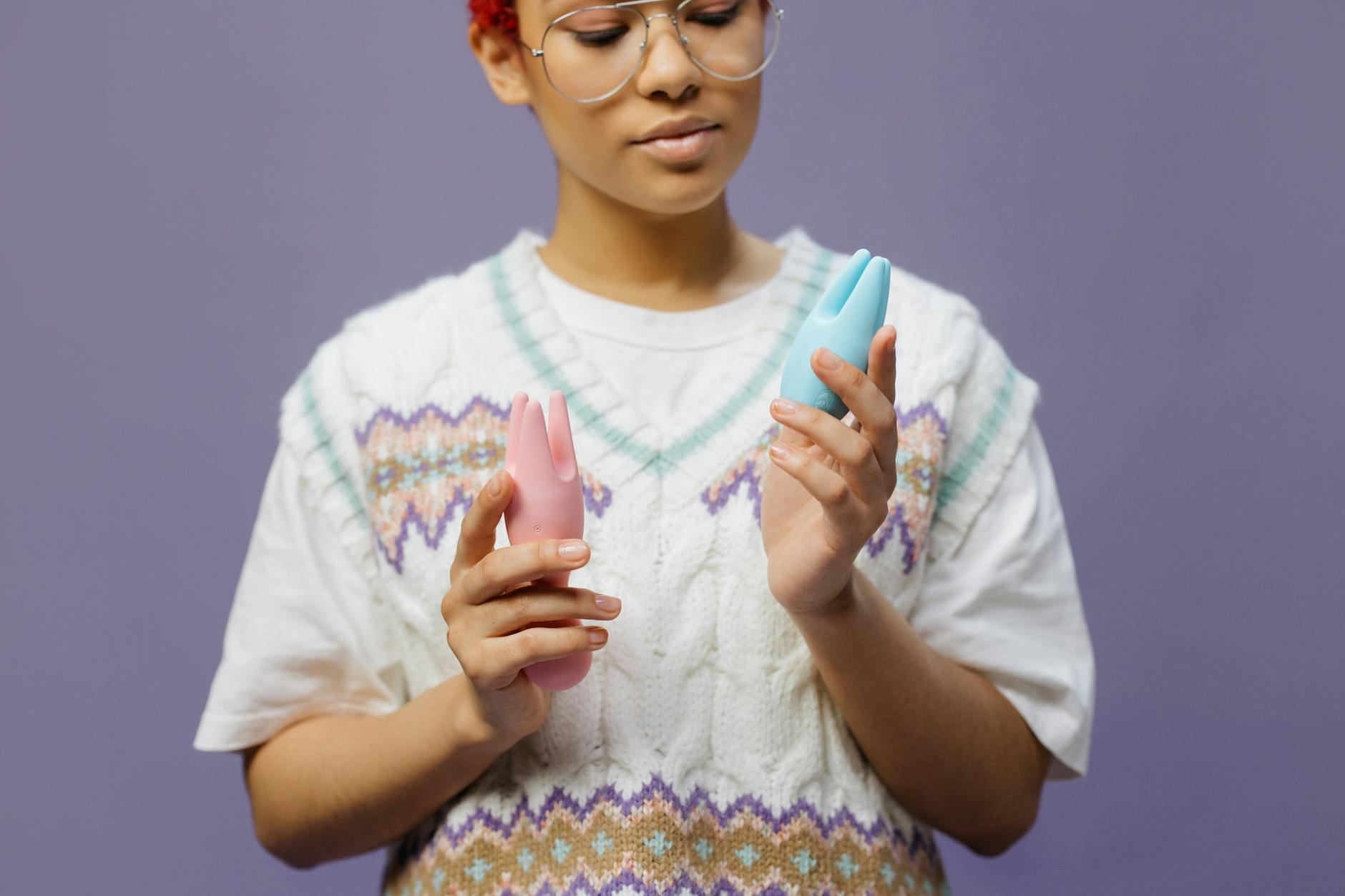
Photo by cottonbro studio on Pexels
Frequently asked questions
Why does my partner feel threatened by clitoral vibrators?
Most partner resistance comes from cultural messaging that equates "toy" with "replacement." Men especially are often taught that a woman's pleasure should come entirely from their body or effort. A vibrator, in that framework, feels like evidence of failure. It's not logical, but it's common. What helps: explaining that a lemon vibrator supplements pleasure, not replaces it. You're not shopping for a replacement partner. You're getting to know yourself better.
Can I use lemon vibrators without my partner knowing?
Yes, technically. But it usually backfires. The moment they find out (and discovery happens more often than people expect), the secrecy becomes the problem, not the toy. The relationship takes a hit of betrayal on top of the original discomfort. It's better to have the uncomfortable conversation once than to manage the fallout of a discovered secret repeatedly.
What if my partner says "if you loved me, you wouldn't need a vibrator"?
That's not a statement about vibrators. That's emotional manipulation. Love and pleasure aren't zero-sum. You can deeply love your partner and still want to explore your own body. If they say this, the work isn't convincing them about the vibrator. The work is setting a boundary around guilt-based decision-making. "I do love you. And I'm still using the vibrator. Those two things can both be true."
How do I bring lemon vibrators into our sex life if my partner has warmed up to the idea?
Start separately. You use it alone first, get comfortable with it, understand what you like. Then, if you want to integrate it into partnered sex, introduce it as "I want to try something that felt really good to me." Let them watch. Don't make it a performance. Let the vulnerability of them seeing you come with the vibrator be the intimacy, not the act itself.
What if we're fundamentally incompatible on this?
Then you have bigger decisions to make. Sexual compatibility matters in long-term relationships. If one partner's needs (like exploring their own pleasure) are non-negotiable, and the other partner's need for total control or comfort with tradition is also non-negotiable, you're at an impasse. That's when couples therapy can help. Not to convince your partner to accept toys, but to help you both decide if this relationship is sustainable.
Does using lemon vibrators solo hurt the relationship?
No. Actually, the opposite. You're less frustrated, more satisfied, more confident in your body. That typically improves intimate connection, not diminishes it. What hurts the relationship is hiding it, framing it as a secret, or using it as a punishment ("I'll just pleasure myself instead"). Used openly and integrated honestly, your own pleasure usually strengthens the partnership.
What comes next
Your pleasure isn't a luxury item or a sign of a problem. It's a foundation. And you deserve a partner who understands that, even if it takes them time to get there. If you want help navigating these conversations or thinking through what compatibility actually means for you, reach out. That's what I'm here for.
Honestly though: buy the lemon vibrator. Use it. Feel good. The conversation gets easier after that first honest moment.