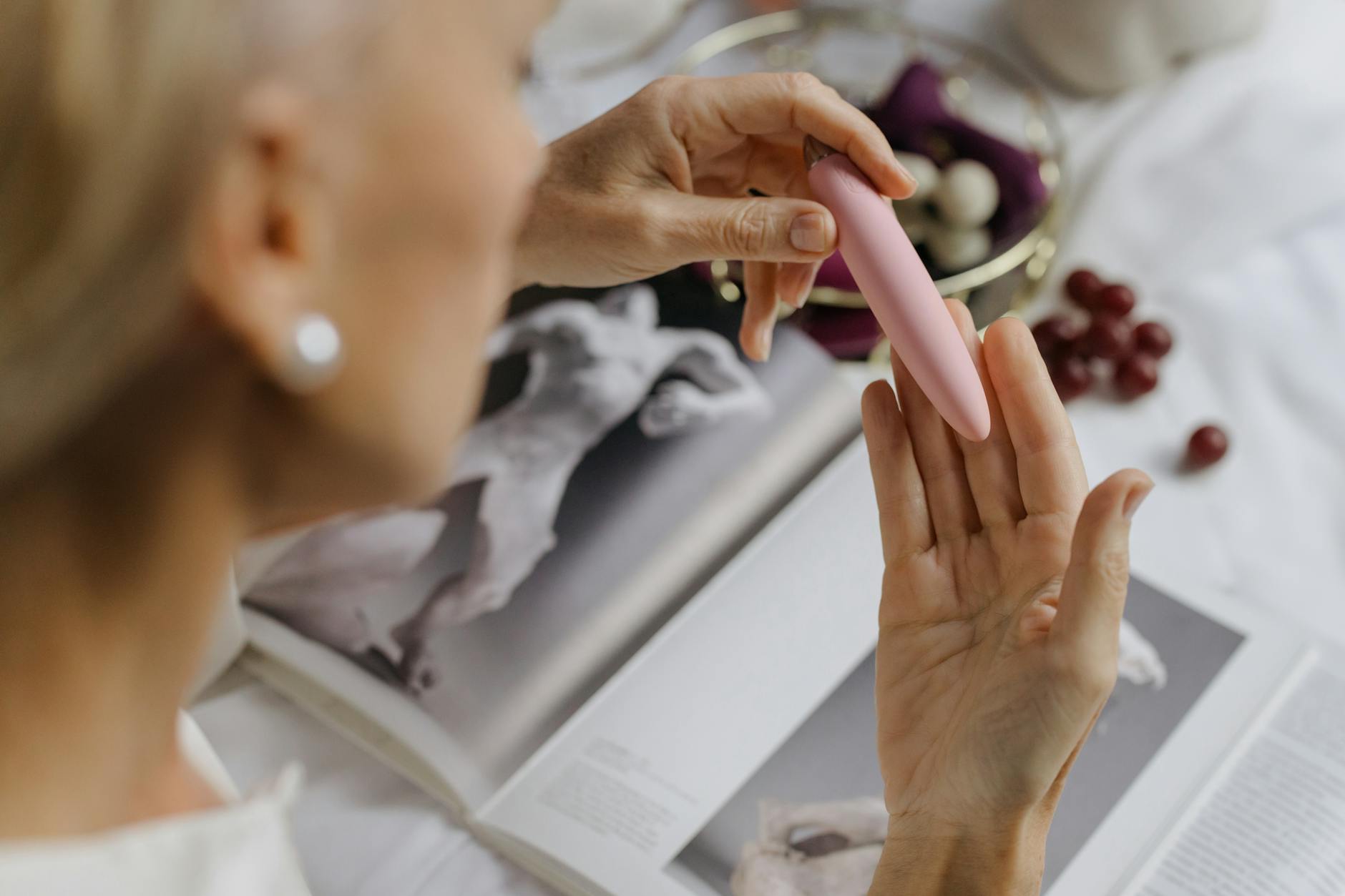
Here's what pelvic floor dysfunction actually does to pleasure
Let's be real. Pelvic floor dysfunction doesn't just hurt. It kills sensation. The muscles that should be relaxed during arousal stay clenched. That tension radiates up through your whole body, blocking the nerve signals that create pleasure, orgasm, and the feeling of being present with your partner.
The worst part? You're not broken. Your nervous system is protecting you. It learned to clench, and now it can't unlearn the habit on its own.
Here's what I'm going to walk you through: how to rebuild arousal when your pelvic floor has been locked in tension, how to use lemon vibrators in a way that feels safe instead of triggering, and how to rebuild trust between your body and pleasure.
Why sensation disappears when pelvic floor muscles stay tight
Your pelvic floor is a group of muscles that wrap around your vulva, vagina, and anus. During arousal, they should relax and stretch. During orgasm, they contract rhythmically. That's the whole chain reaction that creates sensation.
When those muscles are chronically tense, two things happen. First, the tension reduces blood flow to the genital tissue, which means less arousal. Second, the clenching signals to your brain that something is wrong, so your nervous system shuts down the pleasure response as a protection mechanism.
The result? You can touch yourself or use a toy, and feel almost nothing. Or you feel pain instead of pleasure. Or you get frustrated and give up entirely.
The good news is this is reversible. I've worked with dozens of clients who rebuilt their sensation completely after pelvic floor physical therapy and pacing themselves back into pleasure with tools like lemon clitoral vibrators.
Before you touch a vibrator, do this first
Honestly, if you haven't worked with a pelvic floor physical therapist, start there. This isn't optional. A pelvic floor PT can diagnose exactly where the tension lives, teach you what relaxation actually feels like, and give you exercises that retrain your nervous system.
That usually takes 8-12 weeks of weekly sessions. During that time, don't force pleasure. Your job is learning to relax, not to orgasm.
Once your therapist gives you the green light, you can start introducing external stimulation again. A clitoral vibrator like the Lemon works well at this stage because suction-based stimulation doesn't require you to clench in response. The pattern of the suction naturally draws blood to the tissue, which helps your nervous system recognize arousal as safe.
The three-step system for reintroducing sensation
Step 1: Solo, no pressure.
Start alone, in a comfortable position, with zero goal other than noticing sensation. Set a timer for 5 minutes. This isn't a session. It's research.
Use the Lemon on the lowest setting. Focus on the pattern of the suction, not on whether you're aroused or having an orgasm. You're teaching your nervous system that gentle external stimulation is safe.
If you feel tension building in your pelvic floor, stop. Don't push through it. The goal here is to stay under the threshold where your body tightens. That might mean only a minute or two of contact. That's fine. You're retraining, not performing.
Step 2: Add a relaxation cue.
After a few sessions of solo use, add one thing: conscious breath. Before you start, take three slow breaths. Exhale longer than you inhale. This signals to your nervous system that you're safe.
Then use the vibrator for 5-7 minutes, staying focused on the breath. If tension creeps in, breathe. Don't add more stimulation. The breath is doing the work.
Many clients find that after 2-3 weeks of this, sensation starts to return. It's subtle at first. A warmth. A tingling. Not an orgasm. Just the beginning of pleasure being possible again.
Step 3: Extend slowly, with a partner if you want.
Once you can use the vibrator for 10 minutes without pain or excessive tension, you can involve a partner if you have one. But here's the catch: tell them what you're doing and why.
Say something like: "My pelvic floor has been in tension, and I'm retraining it to relax during pleasure. I'm going to use the Lemon, and I might need to stop or go slow. That's not about you. It's about me learning my body again."
This removes the pressure for them to perform or for you to perform for them. You're both in service of rebuilding sensation.
Common mistakes that undo your progress
Three things I see people do that reset the clock.
Jumping to high intensity too fast. If you go from the lowest setting to medium or high, you trigger the protection response. Start low. Stay low for weeks. Your nervous system needs to learn that stimulation is safe before you add intensity.
Trying to orgasm instead of trying to feel. This is the biggest one. You start using the vibrator with the goal of orgasming, and when it doesn't happen, you get frustrated. That frustration tenses your pelvic floor. You've just reinforced the pattern you're trying to break.
Instead, give yourself permission to use the vibrator and feel nothing. Seriously. Tell yourself: "I might feel nothing today, and that's progress because I'm practicing relaxation." The orgasms will come back. Right now, the job is sensation.
Pushing through pain. If anything hurts, stop immediately. Pain is your nervous system saying no. Respecting that is how you rebuild trust with your body.
How to talk to a partner about this transition
If you're in a relationship, your partner might feel confused, rejected, or worried that they're the problem. They're not.
Have this conversation outside the bedroom. Say: "I've had pelvic floor tension that's been blocking my sensation. I'm working with a physical therapist to rebuild that. During this process, I might need to go slower, or pause, or use a tool like the Lemon to help my nervous system relax. This is about my body healing, not about anything you did or didn't do."
Then invite them in if they want. They could hold your hand while you use the vibrator. They could watch. They could leave you alone. All are fine.
What matters is that you're not hiding. Secrecy makes everything feel shameful and wrong. Transparency turns this from a problem into a project you're both invested in.
The timeline for actual pleasure to return
Honestly? Patience is the real tool here.
With consistent pelvic floor PT and weekly solo sessions with a vibrator, most people feel a real shift in sensation within 4-6 weeks. Orgasms usually come back within 8-12 weeks. Some people take longer. That's normal.
The mistake people make is expecting this to happen faster. Your nervous system spent months or years learning that pelvic floor tension was necessary. You can't unlearn that in two weeks.
What you can do is prove to your body, week after week, that pleasure is safe. That's the slow, boring, unglamorous work that actually works.
When to check in with your physical therapist
If you're following this system and sensation is still completely absent after 8 weeks, ask your PT if there's something else going on. Sometimes pelvic floor dysfunction is paired with other things: hormonal shifts, medication side effects, or relationship dynamics that need separate attention.
That's not failure. It's just information.
Likewise, if pain is getting worse instead of better, pause. Your nervous system is telling you something important. Listen to it.
The bigger picture: rebuilding your relationship with pleasure
Pelvic floor dysfunction is almost always connected to something deeper. Stress, trauma, relationship tension, grief. Pleasure and tension can't coexist. So when you rebuild arousal after pelvic floor dysfunction, you're not just retraining muscles. You're rebuilding your nervous system's trust that it's safe to feel good.
That's why the solo practice with something like the Lemon is so valuable. You're not depending on a partner to create arousal. You're teaching your body to create it. That's agency. That's power.
Start there. Everything else builds from that foundation.
Questions people ask about pelvic floor tension and vibrators
Can I use any vibrator, or does it have to be a clitoral vibrator like the Lemon?
Clitoral vibrators are usually better for this situation because they don't require penetration. When you have pelvic floor tension, penetration can actually tighten things further. The suction-based stimulation of a clitoral vibrator pulls blood to the area without requiring clenching, which is gentler for a nervous system that's learning to relax.
Will the vibrator make the tension worse?
Not if you use it slowly and stop when you feel tension building. The vibrator itself isn't the issue. Pushing through pain is. That's why the low-intensity, short-duration approach matters so much.
How do I know if I have pelvic floor dysfunction or if it's something else?
See a pelvic floor physical therapist. They'll do an assessment and tell you exactly what's happening. Pain, tension, inability to relax the muscles, or inability to contract them all point to pelvic floor dysfunction. A PT is the only one who can diagnose it accurately.
Can pelvic floor dysfunction cause complete numbness?
Yes. When muscles are clenched chronically, they reduce nerve activity. Sensation can disappear almost entirely. This usually returns as tension releases, but it takes time.
What if my partner doesn't want to be involved in this process?
Then rebuild pleasure for yourself first. Use the Lemon solo. Reconnect with your own arousal. Once you feel that, you can decide what you want from your partner. Sometimes the process of rebuilding sensation changes what you want from your relationship. That's okay.
Is it normal for arousal to take longer during this process?
Completely normal. Your nervous system is learning that arousal is safe. That takes time. Budget 15-20 minutes just for warm-up and relaxation before you expect anything to happen.
The bottom line
Pelvic floor dysfunction blocks pleasure, but it doesn't end it. Pleasure is underneath that tension, waiting. You rebuild it slowly, consistently, with patience and the right tools. A lemon clitoral vibrator, combined with pelvic floor physical therapy and a commitment to your own nervous system's healing, changes everything. Start low, stay slow, and give yourself weeks, not days. Your body will thank you.