
Let's start here: postpartum bodies are not broken
Your orgasms might feel different after birth. They might arrive slower, or feel less intense, or surprise you by being sharper than before. That's not damage. That's physiology catching up to the biggest physical transition your body has ever experienced.
I work with couples navigating this all the time. The misconception is that sex "just comes back." It doesn't. It evolves. And tools like lemon clitoral vibrators are specifically designed for bodies that need a gentler, more targeted approach to sensation.
What actually happens to pleasure after birth
Perineal tearing, episiotomy, or the pure muscular strain of delivery changes the pelvic floor. That's not subtle. The muscles and nerves are inflamed, fatigued, and relearning how to relax and contract at the same time. Prolactin (the breastfeeding hormone) suppresses estrogen and testosterone, which directly dampens arousal and natural lubrication. If you're not breastfeeding, your hormones still need weeks to stabilize.
Tissue thickness decreases. This is temporary but real. The clitoral nerves don't disappear, but the tissue around them is thinner and more sensitive to rough stimulation. That's where lemon vibrators change the game. The suction-based technology of devices like the Lem doesn't require direct friction on already-tender tissue. Instead, it creates a gentle pulling sensation that stimulates deeper nerve endings.
Your brain is also running on a completely different operating system. Sleep deprivation rewires arousal circuits. Touching a baby all day can create tactile saturation. The mental load of new parenthood genuinely suppresses desire. These are not character flaws. They're neurological facts.
The timeline: when sensation usually returns
Most healthcare providers clear you for penetrative sex around six weeks postpartum. That's the infection risk window, not the pleasure window. I typically tell clients to think in months, not weeks.
Weeks 1-6: No internal stimulation. Your body is healing. Honor that.
Weeks 6-12: Gentle external exploration is fine, but don't expect orgasm yet. The nervous system needs time. If you do orgasm, it might feel weird or incomplete. That's normal.
Months 3-6: Sensation usually begins to return more reliably. This is when many people feel safe introducing a lemon vibrator. The suction technology is less likely to trigger pain or discomfort than vibration alone.
Months 6+: Hormones stabilize (especially if you're not breastfeeding or transitioning out of it). Orgasms usually feel more like themselves again, though some people report they've shifted permanently. They're often stronger and more focused than pre-birth.
Why lemon vibrators work better for postpartum bodies
Three reasons they're a solid choice during recovery:
Suction doesn't rely on friction. A lemon clitoral vibrator uses air-pulse technology, not traditional vibration. That means you can stimulate without the kind of direct pressure that might trigger pain on healing tissue.
Lower starting intensity is safer. Start at pattern one or two on any lemon sexual toy. Your nervous system doesn't need maximum stimulation right now. Gentler patterns allow arousal to build without triggering discomfort.
The shape matters. Devices designed for external stimulation only (like the Lem) mean you're not introducing anything internally during the recovery window. That matters medically and psychologically.
The actual mechanics: how to reintroduce pleasure
Start solo. I know that sounds obvious, but I'm saying it anyway because postpartum pressure to perform for a partner is real and makes everything harder. You need to know what feels good in your own body first.
Set a time when the baby is asleep and you're not about to be touched by anyone else. This is not luxury. This is data collection. You're learning what your nervous system needs.
Apply water-based lubricant generously. Thinner postpartum tissue benefits from it, and it makes everything feel less pressured and more comfortable. Don't skip this.
Start with the lemon vibrator off. Let your body feel the shape and weight. Your pelvic floor is probably still guarded from months of tension. Spend time just touching yourself without stimulation. This teaches your body it's safe.
Turn the device on at the lowest setting. The Lem has multiple patterns, so explore them. You're looking for the one that feels like pleasure, not pressure. Some people find pattern two more comfortable than pattern one. That's fine.
If sensation feels numb or delayed, that's usually temporary. Postpartum nerve sensitivity shifts. Keep exploring gently. Numbness often resolves within weeks as swelling reduces.
When it's time to involve a partner
Before you do, have an actual conversation. Not during sex, not when you're already tense, but when you're both fed and the baby is with someone else. Say something like: I want to start exploring pleasure again. I'm going to use a lemon vibrator. I'd love your support, but I need to go at my own pace.
If your partner is nervous about toys, that's worth addressing separately. There's a whole section in the existing posts on how to talk about lemon vibrators when your partner is hesitant. That conversation is not smaller just because you're postpartum. It might actually be more important.
When you do include your partner, their role is to be present, not to perform. They can be in the room while you explore. They can provide words of affirmation. They can hold you after. What they shouldn't do is take over the device or push you toward orgasm. That removes agency and introduces performance pressure you don't need.
Orgasm is not the goal right now. Sensation is. Pleasure is. Learning what feels good in your changed body is. Orgasm will follow once your nervous system understands it's safe.
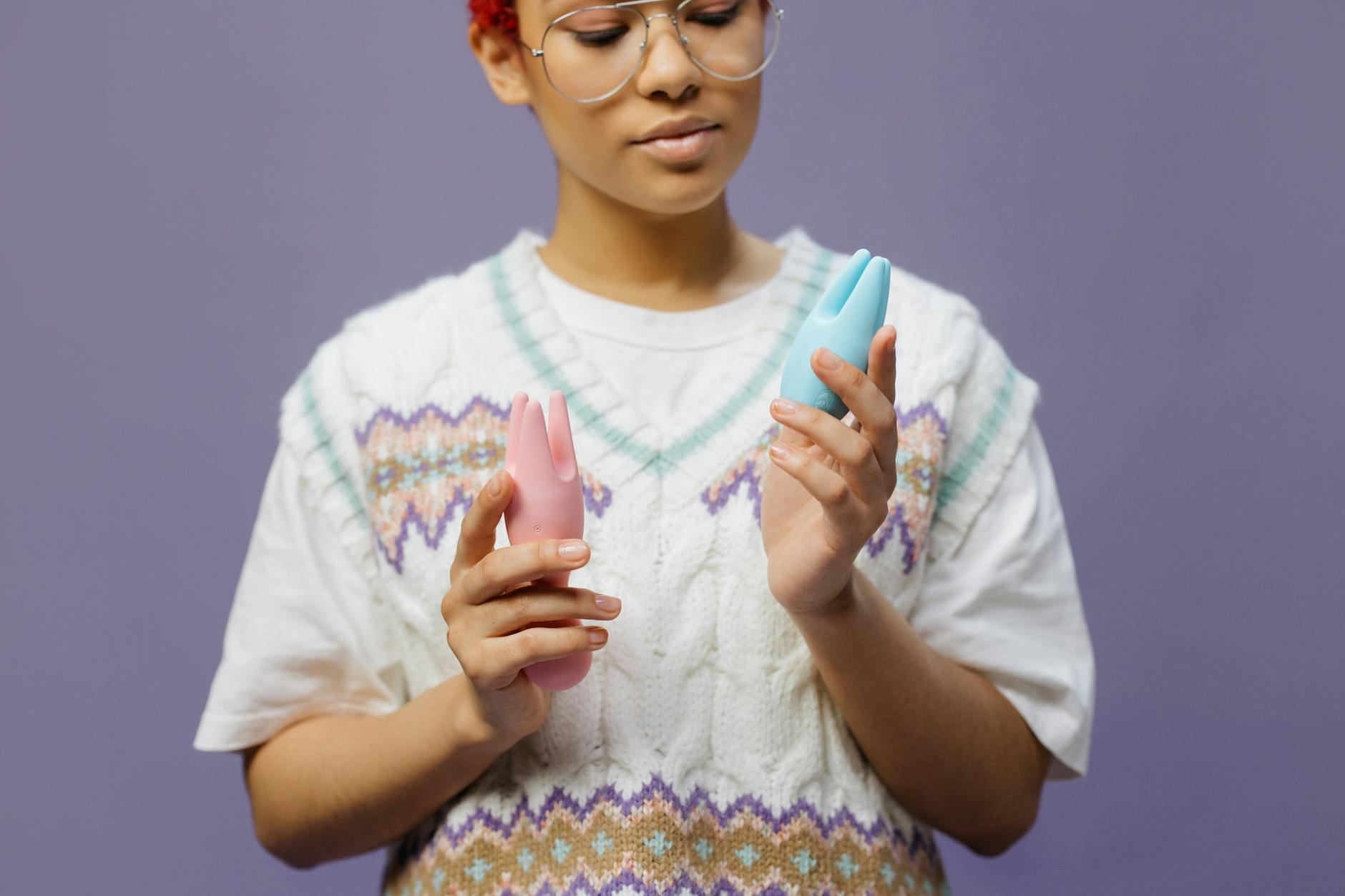
Photo by cottonbro studio on Pexels
The mental shifts that matter more than the physical ones
Your body changed. It grew another human and ejected it into the world. That's profound. Some people feel pride. Some feel grief. Most feel both, rotating back and forth depending on the hour.
Power dynamics often shift after birth. If you were the primary earner and now you're primary caregiver, or vice versa, that changes how you relate to each other sexually. These are not small variables you can ignore in favor of "just getting the spark back." The spark comes back when you've addressed the fact that your entire life has reorganized.
Mother guilt is a real suppressant of desire. You've been touched all day by a baby. The idea of being touched by another adult can feel like overstimulation. That's not a reflection of your feelings for your partner. It's your nervous system saying it needs boundaries. Setting those boundaries actually protects your sexual relationship long-term.
If you're in a postpartum depressive episode, desire will be offline. This is not laziness. This is neurochemistry. Addressing depression is step one. Pleasure follows. If you're experiencing intrusive thoughts about harm, or persistent sadness, or complete flattening of emotion, talk to your doctor before you worry about orgasms.
Common postpartum pleasure problems and how lemon vibrators help
Problem: Pain with any stimulation. This usually means you need more time, more lubrication, or you're triggering a specific scar area. Stop, use a lemon clitoral vibrator on the lowest setting at a slightly different angle, and consider physical therapy for pelvic floor tension.
Problem: Sensation feels totally numb. Postpartum swelling suppresses nerve sensation. This usually resolves between six weeks and four months. Keep exploring gently. The numbness will lift.
Problem: Orgasm used to come easy, now it takes forever. Prolactin, sleep deprivation, and psychological stress all contribute. Extend your warm-up time. Don't rush it. Use a lemon vibrator on a pattern that works for you specifically, not the one that worked pre-birth.
Problem: Your partner wants to skip recovery and resume normal sexual frequency. This conversation is not about the toy. This is about boundaries, consent, and the reality that your body needs time. It's worth having with honesty and maybe with a therapist.
Rebuilding intimacy with your partner while using lemon vibrators
Lemon sexual toys are not about replacing your partner. They're about expanding what's possible when both of your nervous systems are running on less sleep than a hostage in a 1980s thriller.
Using a lemon vibrator together can actually deepen connection because it removes the pressure for your partner to deliver the exact stimulation you need while also managing their own arousal. The device does one job very well. Your partner can focus on presence, on eye contact, on touch in places the vibrator isn't occupying.
Start with outer-clothing exploration. Bring a lemon clitoral vibrator to bed while you're both clothed. Use it on your legs, your arms, places that aren't directly sexual yet. Let your partner see that the device isn't scary. It's just a tool.
Then, when you're both ready, use it during foreplay while your partner touches you in other ways. There's no rule that says your partner's hands have to be still while you're using a lemon vibrator. Movement together, rhythm together, is often what restores intimacy fastest.
Orgasm with a partner in the room is psychologically different from orgasm alone. You might need more time. You might not finish. Both are fine. The point is rebuilding the capacity to feel good while someone you care about is present.
When to see a doctor
If pain persists past three months, see a pelvic floor physical therapist. Not all pain is normal healing pain. Some is scar tissue restriction or prolapse or other treatable conditions.
If orgasm has not returned by six months and you're not on medications that suppress it, there's probably a medical or psychological component worth exploring. A gynecologist trained in postpartum sexual health can rule out underlying issues.
If you're experiencing anxiety around sex, or intrusive thoughts during arousal, or complete loss of desire coupled with other mood symptoms, talk to your doctor. These can be signs of postpartum depression or anxiety disorder, both of which are treatable and both of which improve sexual function once you address them.
FAQ: Common questions about lemon vibrators postpartum
Can I use a lemon vibrator before my six-week checkup?
No. Your body is actively healing and infection risk is real. Wait for medical clearance, even if you feel ready. The difference between week five and week six matters.
Is it normal for postpartum orgasms to feel completely different?
Yes. Some people say they feel more centered. Some say they're weaker. Some say they arrive in a different way. All of these are common. They're not permanent. Most people report orgasms feeling closer to pre-birth within 3-6 months, though many note they've shifted slightly.
My partner doesn't want me using a lemon vibrator because they think it means they're not enough. How do I handle that?
This is a common fear and it's worth taking seriously, but it's also worth being direct: a lemon clitoral vibrator is designed for nerve sensitivity and tissue specificity that no hand can replicate. It's not a replacement. It's an addition. If your partner remains concerned, the related post on partner hesitation covers this conversation in detail.
When can I use penetrative toys postpartum?
Talk to your doctor, but generally eight weeks minimum if there were no complications. Even then, start with something very small and well-lubricated. Internal sensitivity is different postpartum, and your pelvic floor might be overactive. Go slow.
Is it safe to breastfeed and use a lemon vibrator?
Yes. Lubrication on the device won't transfer to your breasts, and orgasm doesn't affect milk supply or safety. Your baby won't know or care.
My orgasms feel weaker. Is this permanent?
Usually no. It's typically a combination of hormone suppression, sleep deprivation, and pelvic floor tension. As breastfeeding demand decreases (or stops), as you sleep more, and as your pelvic floor relaxes, orgasms usually deepen. This trajectory is common and normal.
The long view
Postpartum is not forever. Your body will return to baseline in many ways, though some things shift permanently. That's not loss. That's evolution. Many people find their orgasms become more reliable, more intense, and more focused after the postpartum window. The capacity for pleasure is still there. It's just recalibrating.
Lemon vibrators are designed to support that recalibration. Start gently, prioritize your own sensation before partner involvement, and be patient with yourself. Your body did something remarkable. Give it the same gentleness you'd give to anyone healing.