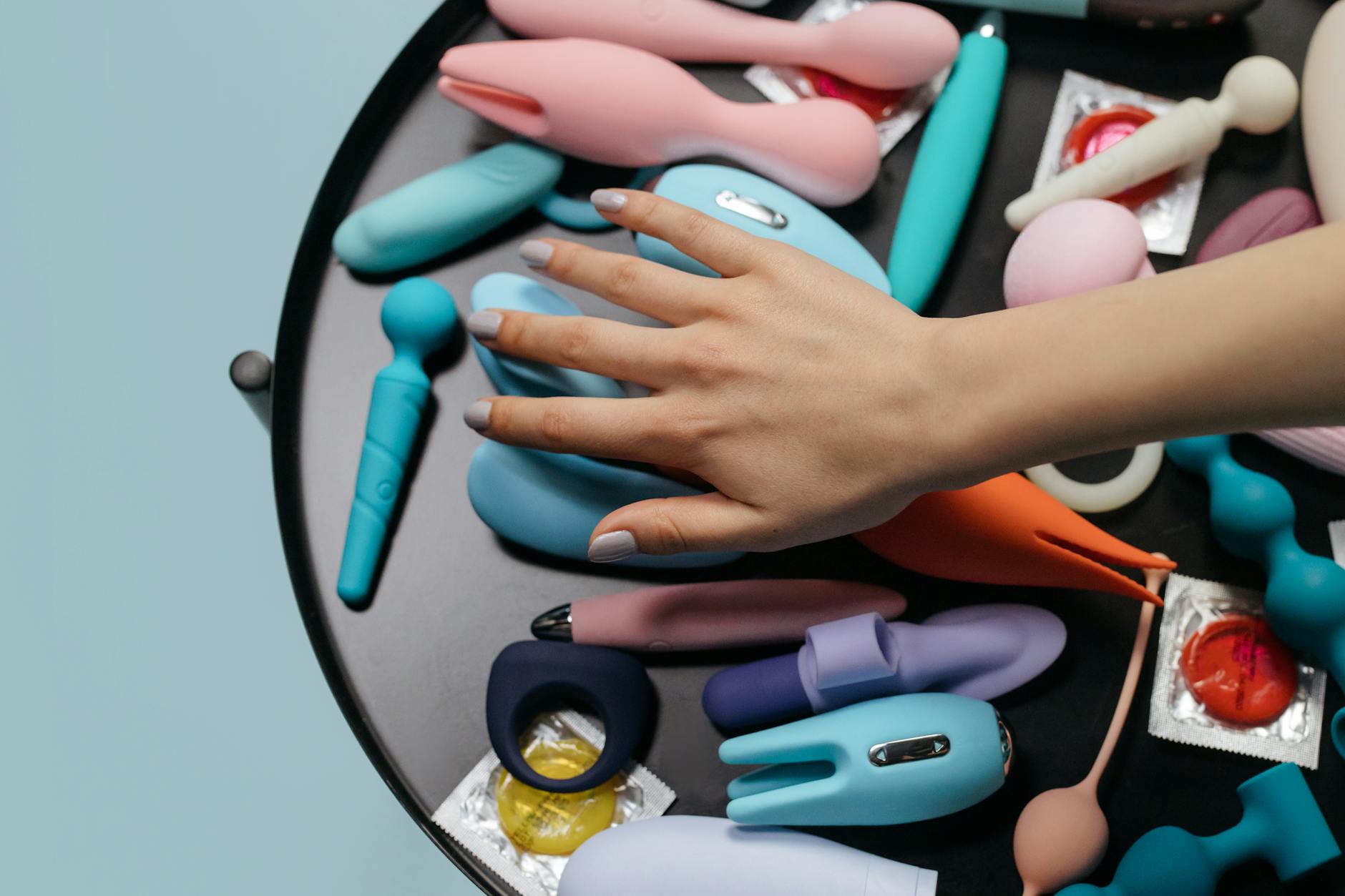
Here's the thing about solo pleasure
When you're single, your pleasure is entirely yours. No negotiating. No timing around someone else's energy. No performance pressure. And yet, somehow, many solo practitioners end up treating self-pleasure like a chore, something squeezed between work and sleep, or skipped entirely because it doesn't feel urgent enough.
It's urgent. Your nervous system needs it. Your body knows this. The problem is that nobody teaches you how to actually sustain a pleasure routine that fits your real, messy, exhausted life.
This is what I work on with single clients constantly. Not the mechanics of using lemon vibrators or other clitoral vibrators. That part is straightforward. What's harder is building a practice that feels natural, not forced, and that actually shows up in your life week after week.
Why consistency matters more than you think
Here's what the research tells us. Regular orgasms (whether solo or partnered) improve cardiovascular health, boost immune function, lower cortisol, and regulate your nervous system. That's not a feel-good claim. That's measurable physiology.
But consistency is where most people falter. You might use your lemon vibrator enthusiastically for a week, then life happens. Stress piles up. You're tired. You forget it's even there. Months pass.
Then comes the guilt. The sense that you should want pleasure more. That something is wrong with you because you're not scheduling weekly orgasms like a self-care queen on Instagram.
Stop. That's not how humans work. Pleasure routines, like any other health habit, need to be built around your actual bandwidth, not your imagined ideal self.
The three obstacles that derail solo pleasure practice
Obstacle 1: Mental load. Your brain is full. Work, relationships, admin, news, family obligations. By the time you're alone, your nervous system is depleted, and the idea of one more thing, even something pleasurable, feels like weight.
Solution: Lower the barrier to entry. Keep your lemon vibrator on your nightstand, charged and accessible. Not hidden in a drawer. Not in a lockbox. Accessible. When friction is low, you're more likely to reach for it on a Tuesday night when you're not expecting to.
Obstacle 2: Performance pressure. Even alone, we carry the internalized voice of what pleasure should look like. It should lead to orgasm. It should be hot. It should last 30 minutes. It should involve fantasy.
None of that is required. Some of your best solo sessions might be 8 minutes of pure sensation with no goal attached. Other days, you might use your clitoral vibrator and not orgasm at all, and that's fine. The point isn't the outcome. The point is that you're attending to your body's capacity for good feeling.
Obstacle 3: Shame or ambivalence about solo pleasure. Even in 2026, some people were raised with messages that masturbation is wrong, or that your sexual energy should be "reserved" for a partner. That stuff runs deep, and it doesn't just go away because you're intellectually on board with sex positivity.
If this is you, I'd gently push back on whether you need permission first. You don't. But I also won't tell you to just "feel fine about it." Instead, reframe it. Solo pleasure isn't selfish. It's maintenance. It's learning your own body. It's nervous system regulation.
How to build a routine that actually sticks
Start stupidly small. Not "I'll have an orgasm twice a week." Start with "I'll touch my body with my lemon vibrator for five minutes, three times a week." You can always extend. But starting small means you'll actually do it.
Anchor it to something you already do. This is the trick from habit psychology that actually works. You don't need a new time slot. You need to attach pleasure to something that already exists in your week. For some people, that's Sunday morning before getting up. For others, it's Wednesday evening after your shower. For some, it's the moment you get home from work and change clothes.
Pick something non-negotiable, something you already do, and make that your anchor. Then, solo pleasure becomes part of that existing ritual, not a new obligation.
Set it up the night before. Charge your clitoral vibrator. Set a timer on your phone for 5-10 minutes. Put some water nearby. Make one small decision in advance so that when you're in the moment, you have zero friction.
Permission slips are real. If you grew up with ambivalence or shame around masturbation, you might need an actual permission structure. Some clients write themselves a permission slip. Others tell a trusted friend they're building a solo pleasure practice and ask for accountability. Others reframe it as self-care on par with therapy or exercise.
What works doesn't matter. What matters is that you have a reason to show up that makes sense to your nervous system.
The pleasure progression
Once you've landed on a consistency rhythm, you can start to explore.
Weeks 1-3: Sensation mapping. Use your lemon vibrator and notice what feels good without any goal. Some people discover their pleasure lives on the sides of the clitoris, not the tip. Others love the pulsing patterns. Others find they're most responsive at a certain time of day. You're collecting data about your body.
Weeks 4-8: Pattern exploration. Once you know the basic landscape, try different patterns. Most clitoral vibrators, including lemon vibrators, have multiple settings. This isn't overthinking. This is play.
Week 9 onward: Integration. You might layer in fantasy, or music, or a specific fantasy partner dynamic. You might use your vibrator differently depending on your mood. You might notice your pleasure changes across your cycle, or with stress, or with what you've been reading.
This is the advantage of a solo practice. There's no audience. There's no pressure to perform. You can be weird and experimental and change your mind constantly.
When to use lemon vibrators versus other approaches
Lemon vibrators, particularly the sucking-style designs, are phenomenal for clitoral stimulation because they don't require heavy direct pressure. If you have sensitivity that changes across your cycle, or if you find traditional vibration too intense, the suction approach offers a completely different sensation.
But they're not the only tool. Sometimes what you need is your hand. Sometimes it's penetration. Sometimes it's the combination of your vibrator and a fantasy. Sometimes it's partnered sex, even if you're not in a relationship, through casual arrangements.
The point is, your solo practice doesn't replace other forms of pleasure. It complements them. It keeps your nervous system awake. It reminds you what you like. It gives you material for communication with future partners.
The emotional side of consistent solo pleasure
Here's what I see happen when single clients actually build a sustainable pleasure routine. Their mood improves. Their sleep deepens. Their relationship to their body shifts. They stop seeing their body as something that exists for others' pleasure and start experiencing it as a source of direct, uncomplicated good feeling.
That changes things. When you know what your body is capable of, you're more likely to accept partners who respect your pleasure. You're less likely to settle for lazy sex or to abandon your own needs in the early stages of attraction.
You become harder to manipulate, basically. Your body becomes less of a question mark and more of a known quantity. Solo pleasure isn't about rejecting partnership. It's about building a foundation of self-knowledge that makes your partnered life better, whenever that arrives.
FAQ: Solo pleasure and lemon vibrators
How often should I use my lemon vibrator if I'm single and building a routine?
Start with three times a week. That's frequent enough to keep your nervous system engaged and infrequent enough that it doesn't feel like a chore. As you settle into the rhythm, you might find you want it more, or less. That's fine. Consistency matters more than frequency. Three times a week for three months beats ten times a week for two weeks.
Is using a vibrator "real" pleasure if I'm not partnered?
Yes. Orgasms are orgasms. Your body doesn't care whether you're alone or with someone. Pleasure is pleasure. The shame around solo pleasure is cultural, not biological. Your lemon vibrator is a legitimate tool for legitimate sensation.
What if I never orgasm when using my clitoral vibrator?
You might still benefit from the routine. Orgasm is one outcome of arousal, not the only one. Some people find that consistent non-goal-oriented touch with a vibrator improves their overall sensation, arousal capacity, and nervousness system regulation, regardless of whether they reach orgasm. That said, if you're consistently not reaching orgasm and you want to, you might need to experiment with pressure, pattern, fantasy, or the timing in your cycle.
Is it weird to use the same lemon vibrator for years?
Not at all. Clean it regularly (your product care guide will tell you how), charge it properly, and a good vibrator will last years. Many people find that the longer they use a tool they love, the more responsive they become to it.
Can a solo pleasure routine affect partnered sex?
Yes, almost always positively. When you know your own body, you can communicate more clearly with partners. You're less dependent on them for your pleasure, which paradoxically makes sex better. You're not waiting passively for them to figure you out. You're bringing knowledge and agency to the bed.
What if I feel guilty about solo pleasure even though I know it's healthy?
That guilt is real and it's common, especially if you grew up with religious or cultural messaging about sexuality. I'd recommend naming it directly: "I have a belief that solo pleasure is shameful." Then ask where that belief came from. Is it still serving you? Usually the answer is no. Working with a therapist on this is worthwhile if the guilt is blocking you. Your pleasure matters.
The bottom line
You're single. That doesn't mean your pleasure goes on hold. It means you get to design a practice entirely around what your body needs, without compromise or negotiation. That's a gift. Use your lemon vibrators or other clitoral vibrators. Build a rhythm that fits your real life. Notice what changes. Your nervous system will thank you, and so will the rest of your life.
If you want to talk through what a sustainable routine might look like for you, or if shame around solo pleasure is getting in the way, reach out. That's what we're here for.