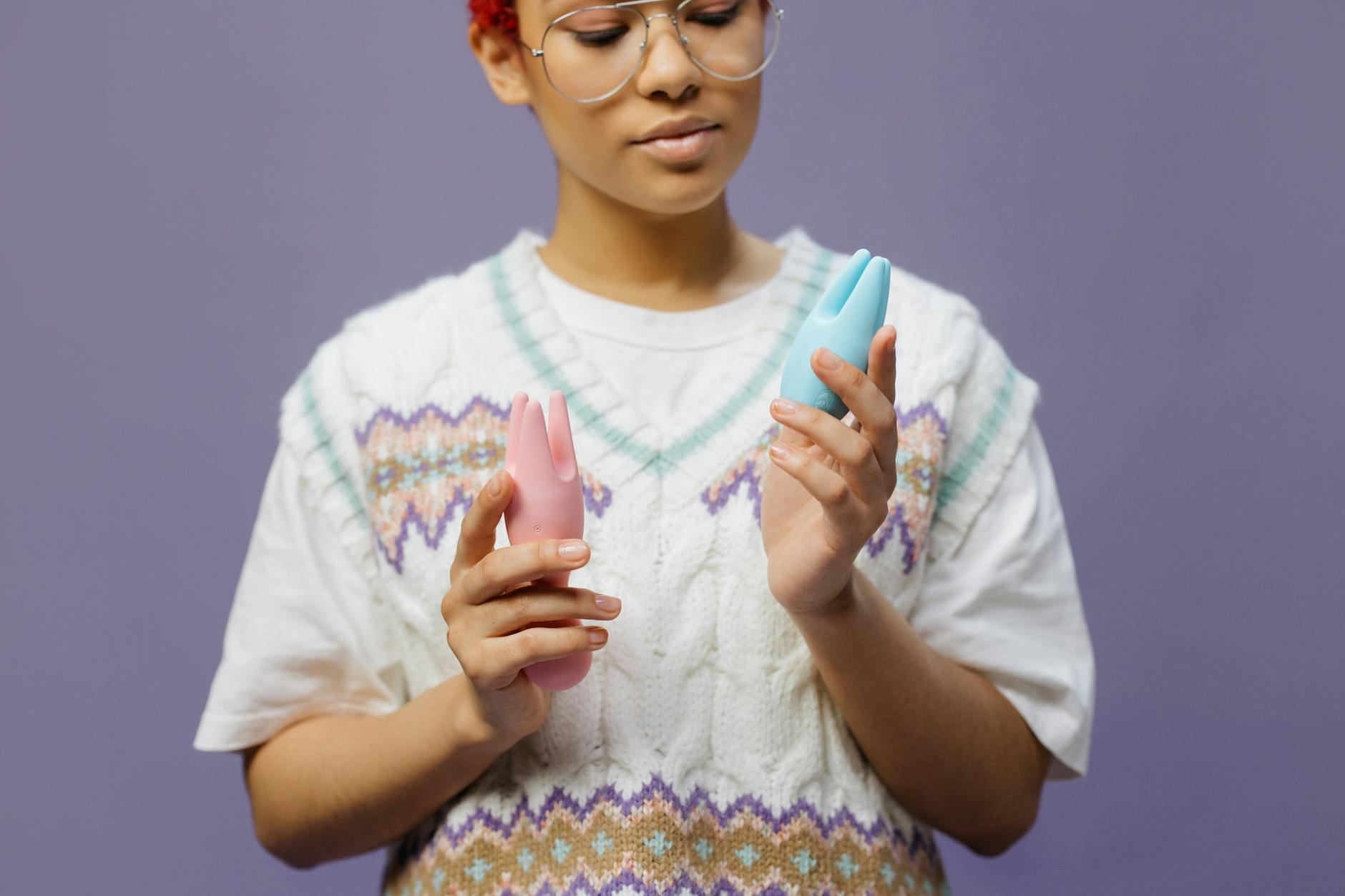
Let's start with the uncomfortable truth
One of you is ready. The other isn't. This happens in almost every long-term relationship at some point, and it's rarely about desire or love. It's usually about biology, stress, or just how your nervous systems are wired differently.
The frustration that builds around mismatched arousal timelines is one of the quietest killers of connection I see in my practice. It doesn't blow up in a dramatic fight. It just slowly erodes things through micro-rejections, unspoken resentment, and that awful moment when someone says "Are you ready yet?" like they're checking the oven.
Here's what I want you to know: Lemon Vibrators and tools like them aren't about fixing your body or rushing your timeline. They're about creating a bridge where two different paces can actually meet.
Why recovery timelines get out of sync
Your body isn't broken if it takes longer to warm up than your partner's does. Arousal depends on a dozen things that have nothing to do with attraction.
Stress, cortisol levels, medications, sleep quality, whether you ate lunch, whether you've been carrying tension in your shoulders since Tuesday. Hormonal cycles affect recovery time too, even if you're not menstruating. And sometimes it's neurological.something about your nervous system just needs a longer ramp-up to register pleasure as safe.
Meanwhile, your partner might be ready in five minutes. They're wired differently. Neither of you is wrong. But the gap creates a problem: one person feels rushed, the other feels rejected.
The mistake most couples make
They try to sync up by rushing whoever is slower. "Come on, we're already here." "Everyone else doesn't need this much time." "Why can't you just." The slower partner then either fakes readiness (which kills intimacy) or shuts down entirely (which kills sex).
The other approach is to just... wait. Silently. While someone's impatient energy radiates across the bed. Which is its own special torture.
Neither works. The first builds resentment. The second builds pressure.
Why Lemon Vibrators change the equation
A clitoral vibrator like Lemon's lets you meet your partner halfway. Here's how: your partner can engage in foreplay, presence, and pleasure while you're still ramping up. They're not waiting. They're not rushing you. They're participating in something that's actively turning you on.
This matters because it removes the "hurry up" energy entirely. You're not slow. You're being stimulated. There's a difference.
The timing strategy that actually works
Start separately, not together. Fifteen minutes before you expect anything, use your Lemon on its gentlest setting while you're doing something low-pressure. Reading. Lying down with your partner watching a show. Doesn't matter. The goal isn't to have an orgasm. It's to wake up your nervous system.
Once blood flow returns, sensation returns with it. The tissues become more responsive. The pathway to arousal becomes shorter. When your partner initiates touch, you're not starting from zero.
Then, when you're together, use the vibrator during foreplay instead of instead of after or as a transition. Your partner can touch you elsewhere while you're using it. They're still participating. The energy is collaborative, not sequential.
This is where the mismatched timeline becomes almost invisible. You're both engaged the whole time. No one's waiting for anyone.
The communication piece nobody talks about
Before any of this works, say something like: "I need a longer ramp-up time, and it's not about you. I want to use a tool that helps me get there faster so we can actually be together on the same page." That's it. You're not apologizing for your body. You're solving a logistical problem.
Then establish a signal. When you're ready, you say it. When they're ready, they say it. No guessing. No performance. Just clarity.
How to Use Lemon Vibrators When Recovery Timelines Don't Match covers the deeper emotional work, but the practical tool is what stops the resentment cycle.
Specific setup recommendations
If you're using a Lemon clitoral vibrator during partnered play, start on pattern 1 or 2. This is steady, predictable, and allows your partner to build their own momentum without competing for attention.
Water-based lube changes everything when arousal is slow. It removes friction, which means you can build sensation without irritation. More comfortable input means faster response from your nervous system.
Position matters too. If you're lying down, gravity helps. If you're sitting up, you might need a pillow for support. Don't underestimate comfort. Tension anywhere in your body prolongs the timeline.
When the gap is really wide
If one of you consistently needs 45 minutes and the other needs five, you're not looking at a vibrator problem. You might be looking at a medical one. Low testosterone, thyroid issues, medication side effects, past trauma affecting nervous system response. A doctor can actually help here.
But if it's just a matter of pace, the gap narrows naturally once you remove the pressure. Pressure is the worst possible accelerant. It does the opposite of what it's supposed to do.
The deeper truth
Mismatched timelines are actually an opportunity to learn something about your partner: that they're patient enough to use a tool with you instead of rushing you. Or that they're creative enough to reframe solo pleasure as something you do together.
The couples who solve this actually end up with better sex. Because they've removed the performance. They've introduced trust. They've made it clear that both of their bodies matter equally.
Lemon Vibrators exist partly because bodies are different. Different speeds, different responses, different needs. Using one together isn't a workaround for a broken timeline. It's an acknowledgment that pleasure is collaborative, and collaboration sometimes requires tools.
FAQ: Mismatched arousal and recovery times
Why does my partner get frustrated when I take longer to be ready?
Frustration usually masks insecurity. They might interpret slowness as a reflection on their attractiveness or desirability, even though arousal speed has almost nothing to do with attraction. A conversation like "I'm slower to warm up, and I want to fix it for us" reframes it from rejection to partnership.
Can I use a Lemon vibrator by myself before partnered sex to "warm up" faster?
Absolutely. This is actually ideal. Ten to fifteen minutes of solo stimulation before your partner arrives can dramatically shorten the gap between your readiness and theirs. It's not cheating. It's logistics.
Does using a vibrator mean my partner thinks I'm not enough?
No. It means your partner is smart enough to use a tool that makes connection easier. Just like using lube or changing positions. Tools solve problems. They don't indicate failure.
What if I'm the faster one and my partner takes forever?
Then you get to practice patience, which is actually a skill that transfers to every other part of a relationship. Use those minutes to build anticipation for them instead of pressure. Touch them. Kiss them. Enjoy the slowness. See how to use Lemon vibrators when your partner wants more foreplay for concrete strategies.
Is it normal for recovery time to change over the years?
Completely. Hormones shift. Stress accumulates. Life happens. Recovery time isn't fixed. It's responsive. Which means flexibility becomes increasingly important in long-term relationships. Tools help you stay connected even when the variables change.
How do I know if slow arousal is a signal of deeper relationship problems?
If you're aroused alone but not with your partner, or if you're consistently anxious or resentful during sex, that's worth exploring with a therapist. Slow arousal can be physical, but it can also be emotional. Both are real and both are worth taking seriously.
What happens next
Start with a conversation. Not about the problem. About the solution. "I want us to figure this out together." Then introduce the tool. Then remove the pressure. Then watch what happens when both of you actually get time to show up fully.
Mismatched timelines aren't a relationship flaw. They're just a detail that requires attention. And once you've solved it, you've actually solved something much bigger: you've learned how to collaborate instead of compete.