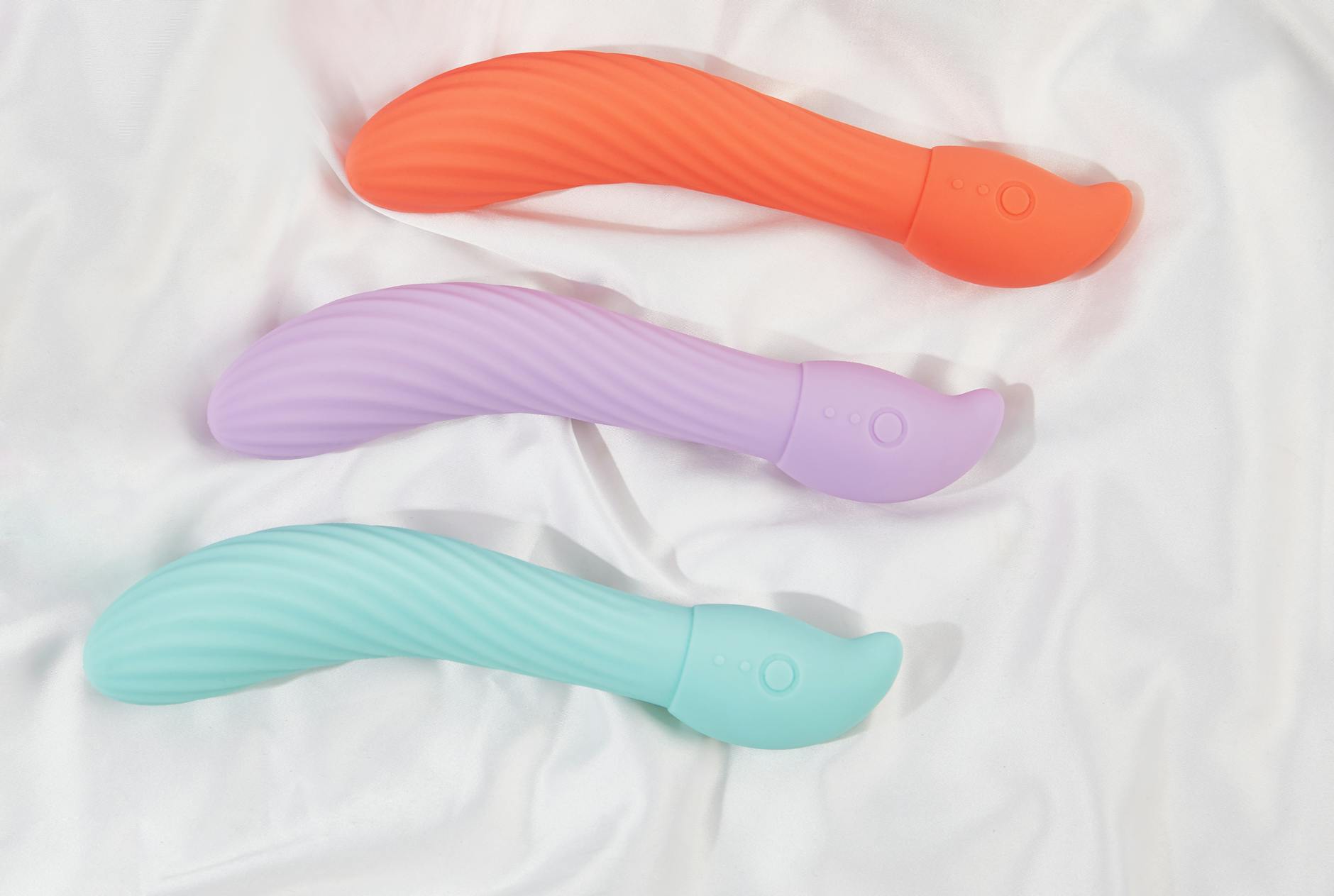
Let's be honest about what parenthood does to desire
You spent fifteen years saying "not tonight, the kids are awake" or "I'm too exhausted." Now the kids are older, your partner still exists, and you're supposed to just flip a switch back to pleasure. Except that switch is gunked up. Your brain has been in logistics mode so long that desire feels foreign, almost suspicious. That's not dysfunction. That's exactly what happens when parenthood absorbs every spare neuron.
The good news: you don't need to rediscover desire the way you had it at twenty-five. You need to build it differently, and lemon clitoral vibrators work surprisingly well for this specific transition.
Why parent burnout kills sensation in particular
Parent burnout does something sneaky to your nervous system. You're hypervigilant to your kids' needs, constantly anticipating demands, running mental checklists. That state of vigilance numbs sensation elsewhere. Your body learns to stop broadcasting small signals because it's too busy scanning for emergencies.
When you finally have time alone with your partner or yourself, that nervous system doesn't instantly reset. You might feel numb, disconnected, like you're watching pleasure happen rather than experiencing it. Or you feel guilty for wanting it at all, which adds another layer of disconnection.
Lemon clitoral vibrators address this in a specific way. Unlike traditional vibration, which can feel like one more thing demanding your attention, the suction-and-pulse pattern of lemon toys creates what I call a "reset pathway." It pulls sensation into one small area so intensely that your brain has to pay attention. You can't multitask through it. You can't think about tomorrow's school run. The pattern forces presence.
The guilt piece (and why you need to address it first)
Here's what I hear most often from parent clients rebuilding pleasure: "I feel selfish. My kid needed me for so long, and now that they don't, I'm supposed to just want sex again? I feel like I'm abandoning the parent role."
That's not a sexual problem. That's a role transition problem. And you have to untangle it before any toy will feel good.
Try this: give yourself explicit permission in words. "I am allowed to have pleasure that has nothing to do with my kids. My sexuality is not selfish. Rebuilding desire is part of rebuilding myself as an adult." Say it out loud. It sounds silly until you realize you've never actually said it.
Then set a small boundary. One evening or afternoon per month that belongs to you and your partner (or to you, alone). Not a performance. Just protected time. This is where lemon vibrators belong.
Why lemon vibrators feel less demanding than you'd expect
One reason parents avoid reconnecting sexually is that they're tired of being needed. Sex with a partner can feel like one more task where someone else's pleasure becomes your responsibility. Solo play with a traditional vibrator can feel obligatory, like homework.
Lemon clitoral vibrators reframe this. The suction pattern is self-contained. You're not performing. You're not managing someone else's experience. The sensation is so localized that it becomes a form of meditation. You're not thinking about whether you're doing it "right." You're just following the pattern your body is showing you.
Start on the lowest setting. Spend the first session just noticing what happens when you're not trying to orgasm. Some parents find that ten minutes of just sensation (no goal) is enough to rewire the nervous system message from "sex is one more demand" to "sex is a break."
The partner conversation is its own thing entirely
If you're rebuilding pleasure with a long-term partner, the sex conversation and the intimacy conversation need to stay separate at first. Otherwise you end up blaming the vibrator (or your body, or your lack of desire) for a relationship dynamic that's actually about fifteen years of both of you running on empty.
Before you bring lemon vibrators into partnered sex, talk about three things: What did we miss most about each other when we were in survival mode? What do we need now that we weren't getting? What feels scary about reconnecting?
Then, separately, explore the vibrator solo. This isn't about gatekeeping pleasure. It's about learning how your body responds when there's zero pressure. When you bring that knowledge back to your partner, the conversation shifts from "why don't I want you" to "here's what helps me come alive again."
How to actually use lemon vibrators after parent burnout
Start slow. You have time now that you didn't before. Block out twenty to thirty minutes where interruption is genuinely impossible.
First session: foreplay with yourself without the vibrator. This sounds basic, but if you haven't touched your own body for pleasure in years, this step matters. Your nervous system needs the reset before adding sensation.
Second session: introduce the lemon vibrator at the lowest intensity. Don't jump to "get me off." Focus on the pattern itself. What does the rhythm feel like? Does it feel medical, or does it pull your attention in a good way? This is data gathering.
Third session: if the first two felt good, you can explore higher intensities. If you felt numb, add more foreplay time next round. Numbness isn't failure. It's information that your nervous system needs more time to come online.
For partnered use, ask your partner to explore it with you without any expectation of penetration or traditional sex afterward. The goal is presence, not performance.
When to know you're back on track
You're not "back" when you want sex twice a week or when orgasms feel like they used to. You're back when you can think about pleasure without guilt. When you can say "I want time alone" without explaining. When you notice sexual thoughts that aren't resentful or obligatory. When the idea of reconnecting makes you curious instead of anxious.
Lemon clitoral vibrators can speed up the somatic piece of that. But the real work is retraining your nervous system to believe that your pleasure still matters. That you matter outside the parent role. Once that belief settles, any good toy just becomes the shorthand.
FAQ
Do lemon clitoral vibrators work if I haven't had desire in years?
Yes, but "work" might mean something different than you expect. They won't create desire from nothing. But they do create sensation that can wake up dormant pathways. Start solo, with zero pressure to orgasm. The goal is to prove to your body that pleasure is still possible, not to chase a specific outcome. Many parents find that three to four sessions of just sensation is enough to flip something neurologically. From there, actual desire follows.
Is it normal to feel guilty using a vibrator when my partner is home?
Completely normal for parents who've spent years feeling selfish whenever they took time for themselves. The reframe: using a vibrator solo is not a rejection of your partner. It's a way of learning what turns you on again so you can bring that knowledge back to partnered sex. It's actually intimacy work. Framing it that way makes the guilt smaller.
How do I bring this up with my partner without making them feel rejected?
Lead with curiosity and collaboration, not problem-solving. Instead of "I want to use a vibrator because sex with you isn't working," try "I want to rediscover pleasure, and I think exploring this together might help us reconnect. I'd like your support, even if it looks different than traditional sex." Most long-term partners are relieved. They've been feeling the same burnout.
What if my partner wants to use the lemon vibrator on me but I feel too watched?
Tell them. "I need to explore this alone first." That's not rejection. That's you protecting your own nervous system so you can actually feel sensation instead of feeling watched. You can always invite them to participate once you've found your own rhythm. Some parents need months of solo exploration before partnered play feels good. That timeline is normal.
Can I use lemon vibrators if I'm still exhausted from parenting?
Exhaustion and low desire are related but different problems. If you're too tired to lie down and spend twenty minutes with yourself, you need rest more than you need a vibrator. But if you're tired and also numb, then the vibrator can actually be part of the solution. The localized sensation can feel like one small thing for yourself, not another demand. Some parents find that fifteen minutes with a lemon vibrator is more restorative than sleep because it's consciously chosen pleasure.
Should I hide the vibrator from my kids?
Yes. Not because there's anything shameful about it, but because maintaining that boundary ("this is mine, not for sharing") is part of rebuilding your sense of self as an adult separate from the parent role. Store it somewhere they won't find it, and keep that boundary consistent. The physical act of putting it away teaches your nervous system that this time and this pleasure belong to you.
You're not starting over, you're starting differently
Parenthood changes pleasure. It doesn't end it. You spent years saying yes to everyone else's needs. Lemon clitoral vibrators are a tool for remembering how to say yes to yourself. But the real work is permission. The vibrator just makes it easier to believe you deserve it.
Start small, stay curious, and give yourself the same grace you've been giving everyone else for the last fifteen years. Reconnecting doesn't look like it did before. It looks like something better because you know yourself now. You just have to remember how to listen.
Ready to explore? Visit /contact to reach out if you'd like to talk through your specific situation with someone trained in relationship dynamics during life transitions.