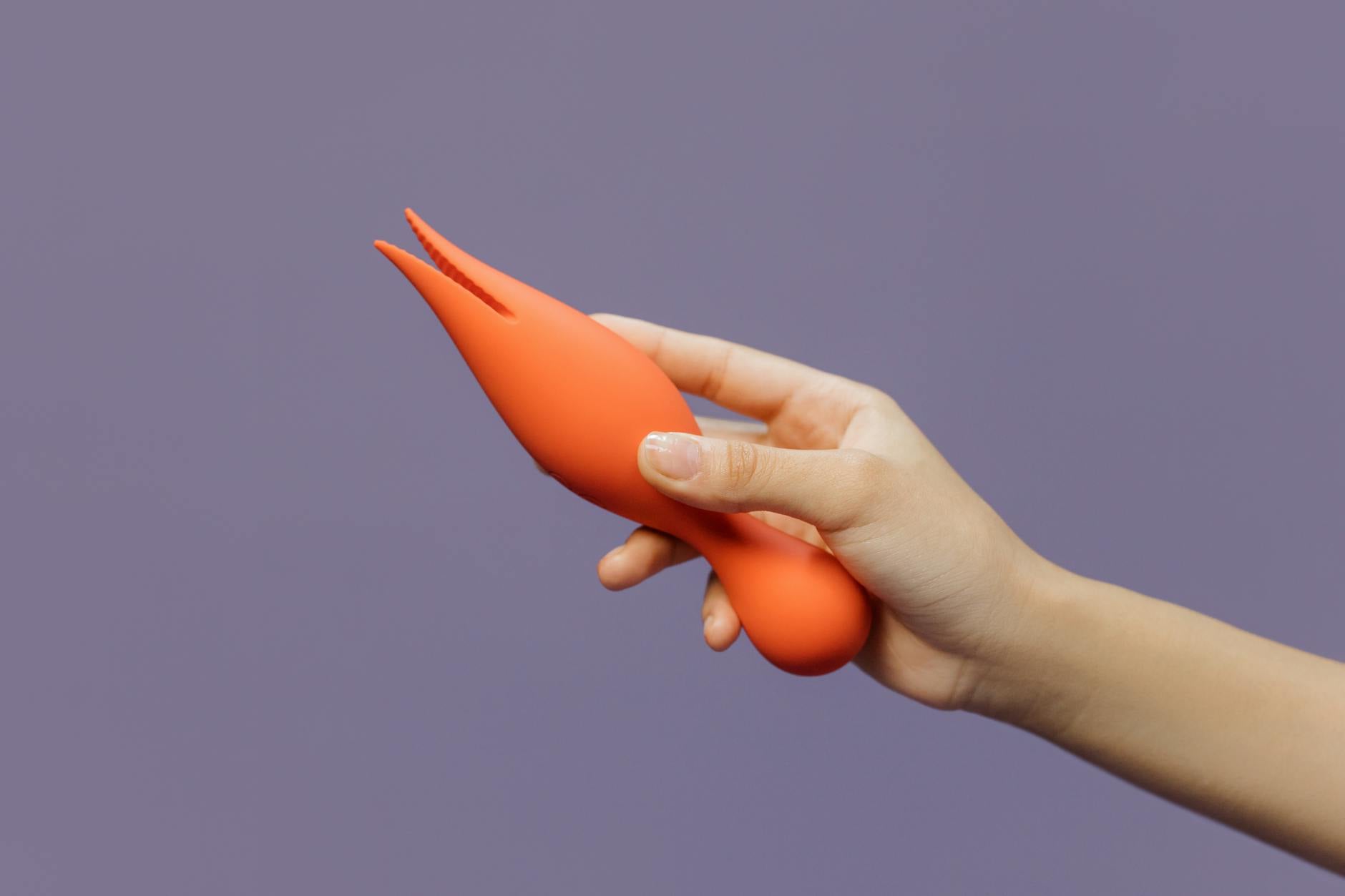
Here's what actually happens to orgasms over time
Let's be honest: orgasms feel different now than they did at 22. For some people, that's disappointing. For others, it's confusing. But here's the thing that nobody talks about clearly. That change isn't a failure. It's information your body is giving you about what it needs.
I've worked with hundreds of people navigating shifts in their orgasms. The pattern is always the same. They notice something has changed, they assume it means something is broken, and they don't mention it to anyone. Then they start avoiding pleasure altogether because the old ways don't work anymore.
But your body isn't broken. It's shifted. And lemon vibrators, specifically the suction-based design of lemon clitoral vibrators, often work better with that shift than traditional vibration does.
What actually changes in orgasm intensity and sensation
Orgasms weaken or feel different for a few concrete reasons, and none of them are moral failings.
First, nerve density doesn't change, but responsiveness does. The clitoris has roughly 8,000 nerve endings throughout your life. But how quickly those nerves fire, and how powerfully, shifts with hormones, medication, stress, and what's happening in your pelvic floor. A tighter pelvic floor can actually muffle sensation. A more relaxed one can sharpen it. That's why some days you feel everything, and other days you're touching the same spot and getting nothing.
Second, the tissues around the clitoris change with estrogen fluctuation. If you're perimenopausal, post-menopausal, on hormonal birth control, breastfeeding, or dealing with prolonged stress, your estrogen might be lower than it was at 25. Lower estrogen means thinner, more delicate tissue. That tissue can feel less intensely stimulated by direct vibration, which is why people often describe their orgasms as "shallower" or "more localized" instead of the full-body rushes they remember.
Third, your mental state is different. At 22, you might have had fewer responsibilities and a simpler relationship to your own desire. Now, if you're managing a career, a relationship, aging parents, or your own health stuff, your brain is processing dozens of concurrent thoughts. That cognitive load is real, and it competes directly with pleasure. You're not broken. You're distracted.
Why lemon vibrators work differently when orgasms shift
Lemon clitoral vibrators use air-pulse suction rather than traditional vibration. This matters because suction stimulates nerves in a way that creates sensation without requiring intense, direct mechanical pressure.
When tissue is thinner or more sensitive, suction feels good where vibration might feel uncomfortable or overstimulating. You're not battering the tissue. You're creating a gentle rhythmic pull that engages the nerve network without the same kind of friction or force.
Second, suction orgasms often feel different in a way that people describe as "more intense" or "more integrated." Some clients tell me that their orgasms with a lemon vibrator feel less clitoral and more full-body, even though they're technically the same tissue being stimulated. The reason is probably neurological. Suction might be recruiting more of the surrounding pelvic floor and deeper nerve pathways than direct vibration does.
Third, and this matters for people whose orgasms have genuinely diminished, suction often gets results when nothing else does. If you've been using traditional vibrators and finding that even on the highest setting, you're not reaching orgasm the way you used to, switching to a lemon sucker can be the exact reset your nervous system needs.
The four adjustments that make the biggest difference
If your orgasms feel weaker or different, try these changes before you assume anything is permanently wrong.
Adjust your warm-up time. Most people trying a lemon vibrator for the first time expect instant results, the way higher-intensity vibrators might work. Suction-based stimulation builds sensation gradually. Expect 10 to 20 minutes of foreplay or solo warm-up before you even turn the device on. Your brain needs time to shift into pleasure mode, especially if you've been running on stress or distraction.
Start on the lowest setting and stay there longer. The Lem vibrator has multiple intensity levels. A lot of people jump to level 4 or 5 because they're used to needing intensity. But suction is efficient. You might find that level 1 or 2 gives you more sensation, more consistently, than level 5 on a traditional vibrator ever did. The key is giving yourself permission to go slower.
Check your pelvic floor tension. A tight pelvic floor mutes everything. If you're stressed, your pelvic floor is probably clenched. Before using a lemon clitoral vibrator, spend three minutes just breathing. Inhale for four counts, exhale for six. As you exhale, intentionally relax the muscles between your anus and vulva. It sounds simple, and it is. But it changes everything.
Give yourself three full sessions before you decide it's not working. Your body needs time to relearn what sensation feels like through suction. The first time, you might feel curious but disconnected. The second time, you'll start noticing the rhythm. By the third time, your nervous system has usually integrated what's happening, and that's when you'll feel the real difference.
Why "weaker" orgasms might actually feel richer
Here's something nobody tells you: a less explosive orgasm isn't necessarily a worse one.
I had a client in her early 50s who was devastated because her orgasms were no longer the intense, full-body contractions she remembered from her 30s. We switched her to a lemon vibrator, and after a few tries, she told me something unexpected. The orgasms weren't bigger, but they felt more pleasurable. They lasted longer. They made her feel more connected to her body, not less.
That's because orgasm intensity and orgasm quality are not the same thing. Intensity is about how forcefully your muscles contract. Quality is about how much pleasure you actually feel and how integrated that pleasure is across your whole body and mind.
If you've been chasing intensity the way you did when you were younger, and you're not finding it, that's worth grieving. But it's also worth exploring whether what you're actually looking for is quality, presence, and sensation. Those three things often show up more reliably with lemon sexual toys than with traditional vibrators, especially as your body changes.
What to do if nothing is working
If you've been using lemon clitoral vibrators consistently for a month and you're still not feeling anything, or if orgasms have disappeared entirely, that's worth mentioning to a doctor. Completely absent sensation can signal nerve damage, very low hormone levels, medication side effects, or other medical stuff that deserves professional attention.
But if your orgasms have just shifted. If they feel different but they're still happening. If the sensation is there but it takes longer or feels more subtle. That's not a problem. That's a signal that your body is ready for a different approach. Lemon vibrators, with their unique suction mechanism, are often exactly that approach.
FAQ: Orgasms feeling weaker or different
Why do orgasms feel less intense as you get older?
Orgasm intensity typically decreases with lower estrogen, increased pelvic floor tension, medication side effects like those from SSRIs, and reduced blood flow to the genitals. Your nerve density hasn't changed, but the tissue and hormonal environment have shifted. Many people also have more cognitive load as they age, which competes directly with sensation. That's not weakness. That's just a different neurological context.
Can a lemon vibrator actually make orgasms feel stronger?
Not always stronger, but often deeper and more present. Because suction stimulates nerves without intense direct friction, many people find they feel more sensation, not less. The orgasm might not be a full-body earthquake, but the pleasure might feel more integrated and last longer. That's frequently perceived as more satisfying than intensity alone.
Is it normal for orgasms to feel different on different days?
Completely normal. Your pelvic floor tension, hormone levels, stress, sleep quality, and whether you've eaten affect sensation moment to moment. Some days you'll feel everything. Other days, the same stimulus produces nothing. That variability isn't pathology. It's just your body being a body.
How long does it take to feel results with a lemon clitoral vibrator?
Most people feel a difference within three to five uses, assuming they're using it correctly. That means starting on a lower intensity, giving yourself longer warm-up time, and staying relaxed in the pelvic floor. If you jump straight to high intensity like you would with a traditional vibrator, you might not notice the advantage of suction.
Should I use a lemon vibrator if my orgasms disappeared completely?
If orgasms have vanished entirely, try one or two sessions with a lemon vibrator to see if the different stimulation helps. But if nothing works after a few tries, talk to your doctor. Complete absence of sensation warrants professional evaluation, especially if it happened suddenly or coincided with a medication change.
Does a weaker orgasm mean my body is failing?
No. Your body is giving you information about what's changed. Your nervous system, hormones, stress levels, and pelvic floor tension all shift across your lifespan. A different orgasm is not a broken orgasm. It's an invitation to adjust your approach and often discover something more nuanced than what you had before.
The bottom line
Your orgasms are allowed to change. You're not failing them. They're not failing you. When sensation shifts, lemon vibrators often work better than the tools that served you before, because suction meets changed tissue and a changed nervous system on different ground.
If you want to explore how your pleasure responds to a different kind of stimulation, start low, go slow, and give yourself at least three dedicated tries. Your body is smarter than you think. It usually just needs the right tool and the right information to show you what it's actually capable of.
Ready to explore what works for your body now? Get in touch with Hello Nancy, and let's talk about what might help.