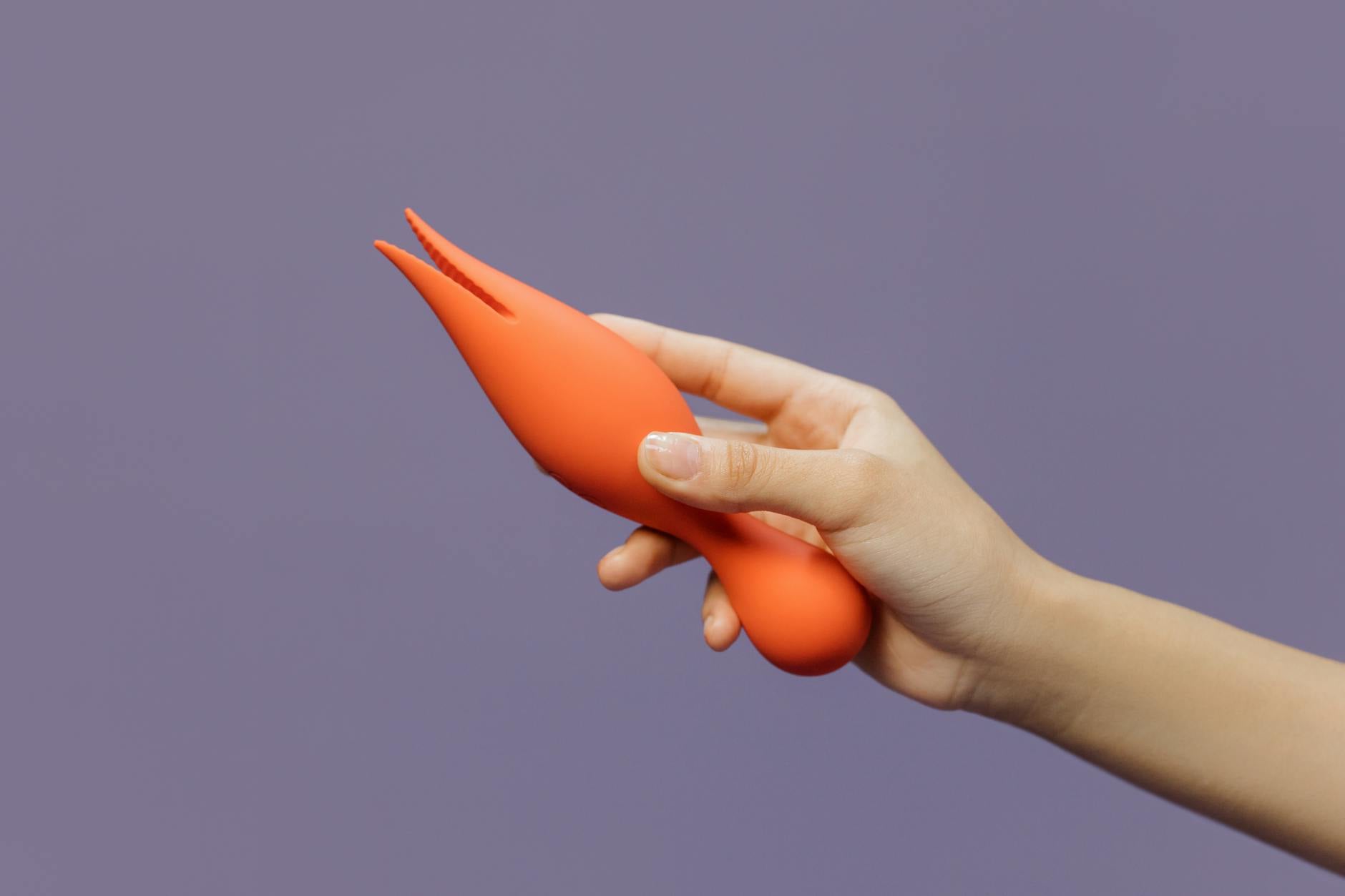
Let's talk about what hormones actually do
Your sensitivity isn't broken. It's shifting. That's a crucial difference, and it changes everything about how you approach pleasure during hormonal transitions.
Whether you're cycling through your menstrual month, navigating perimenopause, taking hormonal birth control, or managing hormonal changes from any other cause, your clitoris is responding to chemical messengers your body releases. Those messengers affect blood flow, nerve sensitivity, and how quickly arousal builds. None of that means pleasure is off the table. It means you might need a different approach.
The good news: lemon vibrators like the Lem are specifically designed for this. Air-suction clitoral stimulation works differently than traditional vibration, which makes it dramatically more effective when hormonal shifts have changed your sensitivity baseline.
How hormones change clitoral sensitivity
Estrogen and progesterone fluctuate throughout your cycle (or stay artificially steady if you're on hormonal birth control). These shifts affect three things that matter for pleasure.
First, they change blood flow to genital tissue. When estrogen is high, tissues engorge more easily. When it dips, everything feels less plump and responsive. This isn't noticeable most days. But during low-estrogen phases or when taking certain birth control formulations, you might notice arousal takes longer to build, or sensations feel muted compared to other parts of your cycle.
Second, progesterone changes nerve sensitivity. High progesterone can dull sensation slightly. Some people report that the days right before their period feel less sensitive than mid-cycle. Others on progesterone-heavy birth control describe a persistent flatness that frustrates them. Again, this is normal. It doesn't mean your capacity for pleasure has changed. Your sensitivity settings have just shifted.
Third, hormonal changes affect your brain's arousal response. It's not just physical. The neurological signals that trigger desire and pleasure get modulated by hormones. A partner, toy, or fantasy that worked brilliantly last week might feel less thrilling when your hormones are in a different phase. This is one of the reasons why cycling sensitivity can feel so bewildering. You haven't changed. Your baseline has.
Why lemon vibrators handle hormonal sensitivity better
Traditional vibrators rely on vibration alone. They push and shake at a constant rhythm, which works fine when your tissue is engorged and responsive. But when hormonal shifts flatten your sensitivity, you need something that works differently.
Air-suction toys like Hello Nancy's lemon clitoral vibrators use gentle pulse and suction instead of buzzing. They stimulate a broader area of the clitoris and surrounding vulva, rather than drilling into a single point. This matters hugely when you're hormone-sensitive.
Why? Because suction doesn't require the same level of baseline sensation to register as pleasurable. A vibrator might feel weak or numb during a low-sensitivity phase. A lemon vibrator, using its signature suction pattern, engages different nerve endings at a different depth. Many people report that the Lem and similar air-suction devices feel more pleasurable during their lower-sensitivity windows than during their high-sensitivity ones.
It's not magic. It's biomechanics. The stimulation profile is gentler, broader, and more consistent with how your body naturally responds when hormones have dialed sensitivity down.
Timing your pleasure around your cycle
If you menstruate or have hormonal fluctuations, you probably already know that some days feel easier for pleasure than others. You can work with this, not against it.
Days 7-14 of your cycle (roughly mid-cycle) are usually your sensitivity peak. Estrogen is high, blood flow is robust, arousal builds quickly. This is when a more intense vibrator might feel perfect. But here's the thing: you can still have great pleasure outside this window. You just need the right tool.
Days 15-28 (after ovulation through your period) tend to be lower-sensitivity territory. Progesterone rises, then both hormones drop. Instead of reaching for your usual vibrator and feeling frustrated, this is when lemon clitoral vibrators shine. The broader suction stimulation creates pleasure even when point-specific vibration falls flat.
If you're on hormonal birth control, your sensitivity stays relatively flattened throughout your cycle (which is partly why some people on the pill notice libido shifts). This doesn't mean pleasure is off limits. It means choosing a tool designed for steady, moderate sensitivity is smarter than trying to force a high-intensity vibrator to work for you.
The practical version: track what works. Note your cycle or your hormonal phase. Test different intensity levels on your lemon vibrator during different phases. You'll likely find that the Lem's lower or medium settings feel incredible during your low-sensitivity windows, and even the high setting during peak-sensitivity days still feels controlled and pleasurable instead of overwhelming.
Adjusting technique when sensitivity fluctuates
Two technical adjustments make a massive difference when hormones are in the picture.
Start lower and escalate slowly. During high-sensitivity phases, many people go straight to their preferred intensity level. When hormones have dialed sensitivity down, begin at intensity 1 or 2 and spend a full 5-10 minutes there before increasing. Let your body catch up to the stimulation. Arousal builds slower, and that's fine. Rushing it wastes time.
Spend more time on warm-up. Hormonal shifts don't change your capacity for orgasm, but they do change the runway you need. Budget 20-30 minutes instead of 10. This sounds long, but it's not about effort. It's about giving your nervous system time to register pleasure when hormonal signals aren't screaming "yes" at maximum volume. Touch other parts of your body first. Build anticipation. Then introduce the lemon vibrator.
When to consider a different formulation
If you're on hormonal birth control and you've noticed a persistent flatness in sensitivity or desire, it's worth a conversation with your doctor about whether a different formulation might help. Progestin-only pills, IUDs with lower hormone doses, and some combined pills have different effects on sensitivity and libido.
Similarly, if hormonal fluctuations are making pleasure feel so inconsistent that it's causing frustration or relationship tension, tools like this can bridge the gap. A lemon vibrator isn't a treatment for hormonal sensitivity shifts. But it's a practical way to keep pleasure accessible regardless of which phase you're in.
Using lemon vibrators with a partner during hormonal shifts
Here's where it gets practical for relationships: if you've got a partner, they might notice your sensitivity shifts before you do. "You seem less interested lately" or "You came less quickly last time" are comments that sting because they're often true, and it feels like something's wrong with you.
It's not. Your hormones have shifted your sensitivity baseline. That's information, not failure.
When introducing a lemon vibrator into partnered play during a low-sensitivity phase, frame it clearly: "I want to explore this during my lower-sensitivity week and see if it feels different." Most partners are relieved to have a solution that lets pleasure stay on the table instead of watching frustration replace connection.
The Lem and similar suction toys are also less intrusive during partnered sex than traditional vibrators. You can use one while your partner is inside you, which offers a different kind of dual stimulation than a standard vibrator. This can actually feel better during hormonal phases when penetration alone doesn't quite get you there.
FAQ: Hormones and lemon vibrators
How do I know if my low sensitivity is hormonal or something else?
Hormonal sensitivity changes are usually cyclical or tied to a specific medication change. If your sensitivity drops and stays dropped across weeks and months, something else might be going on. Worth checking in with a gynecologist. If it correlates with your cycle, or you recently started a new birth control, hormones are almost certainly the culprit. A lemon vibrator can help you work with that reality while you figure out the bigger picture.
Can I use the Lem during my period?
Completely. Many people find that menstruation actually increases clitoral sensitivity slightly (blood flow to the area rises). Some prefer to use it before their period starts, or during the earlier lighter days. The Lem is waterproof, so if you use it during your period, just clean it thoroughly afterward. Your body, your choice on timing.
If I'm on birth control that kills my libido, will a lemon vibrator fix it?
No tool fixes hormonal medication side effects. But it can make pleasure more accessible while you're on that medication. If your birth control is tanking your desire and a lemon vibrator still doesn't reignite things, that's worth discussing with your prescriber. Sometimes a different pill, a lower dose, or an entirely different contraceptive works better. A vibrator is a workaround, not a solution to a medication problem.
Does PMS affect how the Lem feels?
Yes, often in a good way. PMS usually comes with slightly heightened clitoral sensitivity and increased blood flow. Some people say the Lem feels most intense right before their period. Others say it feels just right, where normally it might feel underwhelming. Everyone's different. Track what works for you.
Can hormonal birth control permanently change my sensitivity?
No. If you stop hormonal birth control, your sensitivity baseline usually returns to your natural cycle pattern within 2-3 months. The shifts you experience on the pill or IUD are reversible. That said, some people find their sensitivity profile is genuinely different after stopping birth control, not because of permanent change but because they're experiencing their natural cycle for the first time in years and it feels unfamiliar.
What if my sensitivity stays high no matter the cycle phase?
Then you might be someone whose hormonal fluctuations are gentler or less noticeable. You can still use a lemon vibrator effectively, just at higher intensity levels if you prefer. Not everyone cycles dramatically. That's normal too.
The bottom line
Hormones change sensitivity. They don't change your right to pleasure or your capacity for it. A lemon clitoral vibrator bridges the gap between your baseline sensitivity on any given week and the stimulation you actually want to feel. That's not working around your body. That's working with it.
If hormonal sensitivity shifts have been making pleasure feel unpredictable or frustrating, it's worth exploring how a tool designed for variable sensitivity might change things. Your pleasure matters, even when your hormones are playing tricks.
Want to explore what works for your body? Start here and let's figure out what you need.