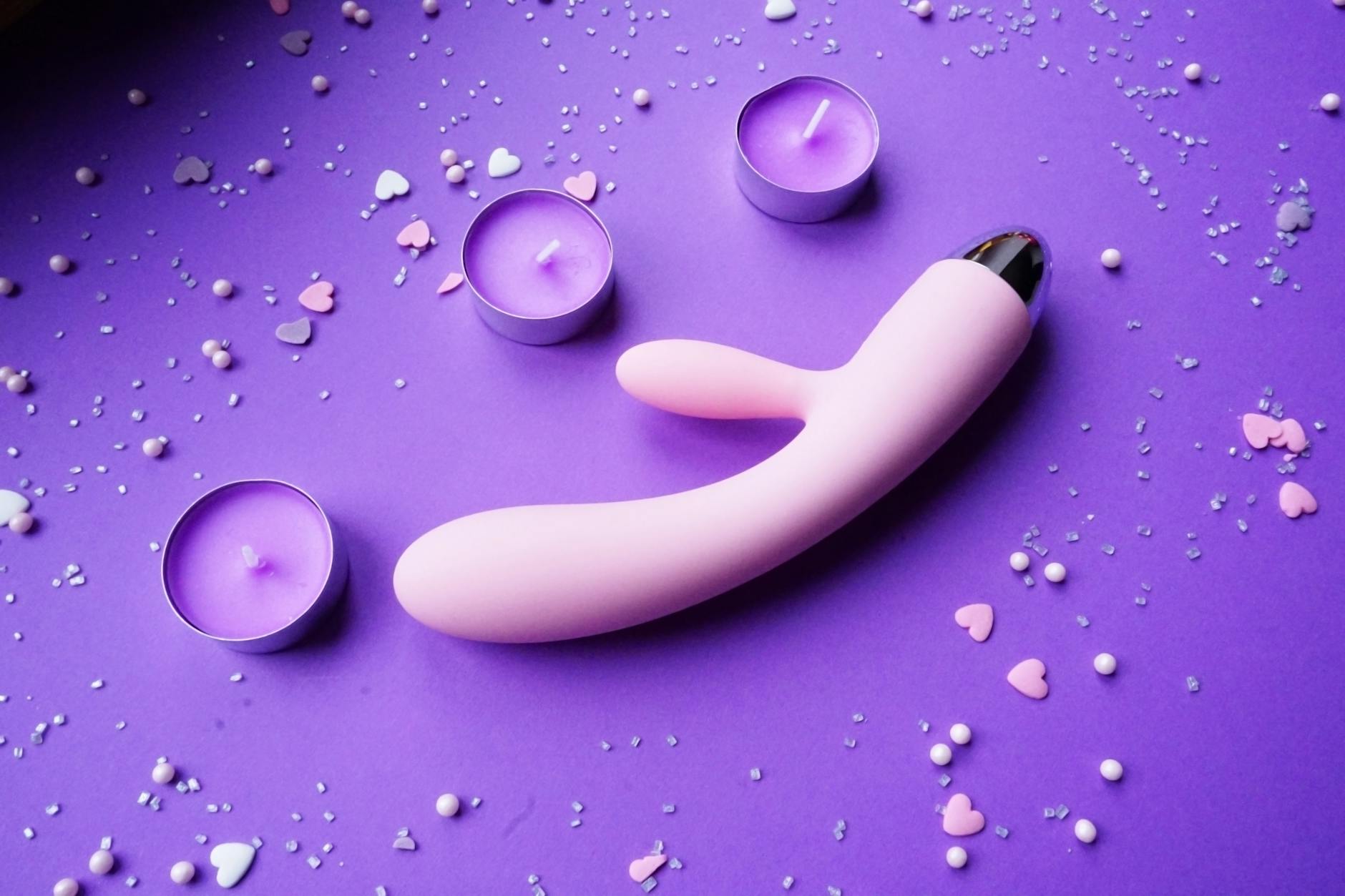
Here's the thing about slow arousal
Your arousal didn't disappear. It just changed speed. And that's not a problem to fix. It's information to work with.
Most people don't talk about this openly, so you might think you're alone in noticing that getting turned on takes longer than it used to. You're not. Hormonal shifts, relationship changes, stress, age, medications, even just being more aware of your own body as you get older all affect how quickly arousal builds. The brain takes longer to register signals. Blood flow responds more slowly. Tissues need more time to prepare. None of this is abnormal. It's just different from what you expected.
The trap is treating slower arousal like a malfunction you need to override. That leads to frustration, which kills arousal faster than almost anything else. The better move is to design your approach around the pace your body actually moves at now.
Lemon clitoral vibrators, especially air-suction devices like the Lem, work beautifully with slow arousal because they don't demand intensity from the start. They work with you.
Why arousal slows down as you age
There are actually several physiological reasons your warmup time has lengthened, and knowing them matters because it shifts you from feeling broken to understanding what's happening.
Estrogen and testosterone both influence how quickly blood flows to the genital tissue and how fast nerve sensitivity peaks. As these hormones shift across your lifespan, the timeline stretches out. This isn't just a menopause thing, either. Stress hormones like cortisol suppress arousal signals. Antidepressants and blood pressure medications can extend arousal phases. Relationship patterns change too. Early-relationship arousal often comes with novelty and adrenaline. Long-term relationships require more deliberate activation of desire, which just takes a different kind of time.
Your nervous system also changes how it processes pleasure signals. The pathways are still there, but they're less reactive and more discriminating. Which honestly means your arousal becomes more intentional and less fragile than it was when you were younger.
What slower arousal actually means for pleasure
Here's where most advice gets it wrong. People think slower arousal means weaker orgasms, less intensity, or lower capacity for pleasure overall. That's backwards. Slow arousal actually primes you for deeper sensation and often more satisfying release.
When you rush into stimulation before your body is ready, you hit an intensity ceiling quickly and then plateau. When you give arousal time to build properly, you're allowing your nervous system to activate layer by layer. By the time you reach peak sensation, you've already traveled through your full range of responsiveness. That journey matters more than the speed.
The other thing that changes is where arousal lives in your body. Younger arousal often centers in one spot and builds outward. Slower arousal often spreads more evenly across your pelvic floor, abdomen, thighs, even your chest and shoulders. It's less localized and more diffuse. A lot of people report this feels richer, even if it takes longer to reach orgasm.
The timing strategy that works
Instead of thinking about arousal in minutes, think about phases.
Phase one is what I call "permission to exist." This is 10 to 15 minutes where you're just settling into your body without any goal or destination. No vibrator yet. This might be a bath, a massage from your partner, lying down with your eyes closed, reading something that turns you on. The point is to signal to your nervous system that pleasure is on the menu today. Your brain needs this buffer time to shift out of task mode and into sensation mode.
Phase two is light contact. Now you can introduce the lemon vibrator, but keep it on the lowest settings (patterns 1 through 3 on most devices). Move it slowly around your external genital area without aiming for orgasm. This phase lasts 10 to 20 minutes. You're building arousal signal, not chasing climax. This is where a lot of people get impatient, but this phase is non-negotiable if you want the fullness of what your body can do.
Phase three is where intensity can gradually increase if you want it to. By this point, your tissue has engorged, your breathing has changed, and your nervous system is primed. Now you can move to patterns 4 through 7, or focus on your most sensitive areas. You might orgasm here, or you might just reach a plateau of really good sensation and stay there.
The whole arc typically takes 30 to 50 minutes. That's not wasted time. That's the actual experience.
How lemon clitoral vibrators match this rhythm
The reason I recommend lemon air-suction devices so consistently for people with slower arousal is that they're built for this kind of gradual escalation. Traditional vibrators demand a lot from your tissue right away. The movement is aggressive at every level. Air-suction toys work differently. They create a gentle suction pulse that feels responsive and building rather than intrusive.
Start on pattern 1. It feels barely like anything. That's correct. You're not supposed to feel like your clitoris is being attacked. You're supposed to feel like your body is being invited into pleasure. Most people spend 10 to 15 minutes just getting used to the sensation on pattern 1. This is where your nervous system really starts waking up.
Move to pattern 2 or 3 when the sensation starts to feel slightly boring. Not when you think you "should." This progression takes another 10 to 15 minutes usually. By pattern 3, you'll likely notice your arousal is actually building in a way that feels real and grounded.
Patterns 4 through 7 are there if you want more intensity, but plenty of people find that patterns 2 and 3 are actually their sweet spot when arousal is moving slowly. The slowness of the rhythm can feel more satisfying than the speed. Your body can follow along instead of trying to catch up.
The partner dimension
If you're doing this with a partner, the frame shifts slightly. Your partner's impatience can actually interrupt your arousal building, so you need to communicate the timeline upfront. "I need about 30 to 45 minutes from start to really feeling something," is good information to have on the table before you start.
A partner can help with phase one by handling the bath, the massage, or just creating space for you to relax. They can be present during phase two without needing to do anything, just touching you in non-genital ways or being nearby. By phase three, if they want to be involved, they can. But the structure is about your arousal, not theirs.
One note: if your partner is used to faster arousal and sees the slowing as rejection or loss of attraction, that's a different conversation entirely. That's about reassurance and presence, not about the mechanics of your pleasure. Worth having that talk separately from the actual sexual experience.
When to adjust your expectations versus when to seek help
Slow arousal is normal. Non-existent arousal is different. If you're going through phase one and two and feeling nothing at all, even mild interest, that's worth exploring with a doctor or therapist.
Likewise, if arousal slows down suddenly when it wasn't slow before, there's usually a reason. Medication change, new relationship stress, grief, depression, burnout. These things are real and they deserve attention.
But if arousal is just slower and everything else is functioning normally, you're not broken. You're just operating at a different rhythm. And honestly, that rhythm often produces better, more embodied pleasure than the quicker version did.
The one-sentence shift that changes everything
Stop thinking of slow arousal as foreplay and start thinking of it as the main event. The hour you spend gradually building sensation is not a warm-up to the real thing. It is the real thing. Once you frame it that way, the pace becomes the point, and everything shifts.
Your body knows what it needs. The lemon vibrator is just a tool for listening to it.
People Also Ask
How long should arousal take if it's taking longer than I expect?
There's no "should." Arousal timelines vary wildly depending on age, stress, hormones, relationship history, and individual neurology. If you're spending 20 to 50 minutes building arousal and it feels natural, you're probably right on track. If arousal is taking hours and feeling painful or frustrating, that's worth mentioning to a healthcare provider. The question isn't how long it should take. It's whether the time you're spending feels tolerable and produces pleasure at the end.
Can a lemon vibrator actually help if my arousal is really slow?
Yes, because air-suction vibrators like the Lem don't force your body into intensity. They work at the pace your nervous system wants to go. The gentleness of the device matches the gentleness of slow arousal. You can spend 20 minutes on the lowest settings and actually feel arousal building instead of feeling frustrated that nothing is happening. That said, a vibrator alone won't solve underlying issues like depression, relationship conflict, or medication side effects. It's one tool in a larger picture.
Is slower arousal a sign of a bigger problem with my partner?
Not necessarily. Slow arousal can happen in relationships where everything is fine and with partners you're very attracted to. That said, relationship stress, unresolved conflict, or mismatched desire levels can absolutely slow arousal down. If slower arousal is new and happened around the same time as relationship shifts, it's worth having a conversation with your partner or a therapist about what's actually happening underneath. Sometimes it's physiological. Sometimes it's relational. Usually it's both.
Does slow arousal mean I'm not attracted anymore?
No. Attraction and arousal are different systems. You can be very attracted to someone and have slow arousal. You can be in a relationship where desire was always slow. You can also have slow arousal as a sign of depression or stress, which has nothing to do with attraction. The way to figure out what's actually going on is to notice whether you feel desire when you're alone, whether you're stressed about non-relationship things, and whether you're physically okay. Those answers tell you whether this is a solo thing, a relationship thing, or a health thing.
Should I be using more intense vibrators if arousal is slow?
Actually, the opposite often works better. Intense vibrators can feel overwhelming when arousal is moving slowly. You end up chasing intensity instead of building arousal. Air-suction devices and lower-intensity toys actually allow your nervous system to follow along and keep pace with itself. Save the high-intensity patterns for when you're already well into arousal, not for trying to jump-start it.
What if my partner gets frustrated with how long arousal is taking?
That's a conversation worth having outside the bedroom. Your partner's impatience is their nervous system responding to perceived rejection. You can reassure them that slow arousal isn't about them or your attraction. You can also set expectations before you start. "I need about 40 minutes to get to orgasm tonight. You don't have to do anything the whole time, but I need you to understand that's the timeline." Some partners relax once they know what to expect. Others need more reassurance about what this means for your connection. That's relationship work, not arousal work.
What comes next
Slow arousal is an invitation to know your body better, not a failure of your body. The lemon vibrators and suction toys designed for gradual stimulation are built for exactly this. Your pace is your pace. Work with it instead of against it, and you'll find that slower arousal often leads to deeper, more grounded pleasure than the rushed version ever did.
If slow arousal is new or feels stuck, reach out. Whether you need a medical opinion, a relationship check-in, or just someone to talk through what's changing, we're here to help.